




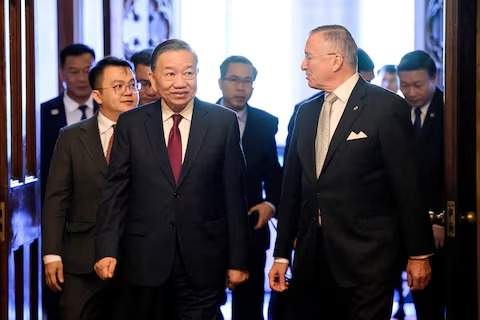
Australia and Vietnam agreed on Tuesday to deepen their broad comprehensive partnership following major diplomatic talks. Australian Prime Minister Anthony Albanese welcomed Vietnamese President To Lam during an official state visit focused on expanding mutual trade, regional defense, and border safety.
The two nations signed important agreements covering defense cooperation, agricultural trade, and border protection. Both leaders expressed shared concerns regarding restrictive trade actions that interrupt global supply chains. They pledged to protect essential trade routes and keep commercial networks running smoothly across the broader Indo-Pacific region.
Prime Minister Albanese and President Lam agreed to build stronger supply lines in high-value sectors. These key industries include critical minerals, advanced semiconductor design, and clean energy development. Securing these raw materials and modern technologies helps protect both national economies against future trade shocks or foreign supply delays.
During a formal ceremony, the leaders witnessed the signing of a key memorandum between law enforcement agencies. The agreement pairs the Vietnam Coast Guard with the Australian Border Force to improve maritime security and regional patrol efforts. A secondary agreement focuses on direct border force assistance to stop illegal smuggling and improve port safety checks.
Speaking to press teams after the signing event, President Lam called for open dialogue and mutual trust between nations. He emphasized the importance of maintaining freedom of navigation in busy sea lanes while resolving regional disputes peacefully under international law.
Diplomatic ties between Australia and Vietnam have grown steadily in recent years due to expanding commercial links and shared security concerns. Two-way trade has reached record levels, driven by demand for farm goods, energy products, and educational programs.
The newly signed farm trade agreements give Australian food producers better access to fast-growing consumer markets in Southeast Asia. In return, Vietnam secures stable access to raw minerals and industrial supplies needed to feed its manufacturing plants.
Both leaders highlighted the value of clear communication during periods of global economic shift. By aligning policies on digital trade, clean energy, and maritime safety, both governments aim to make their home industries more resilient against international market disruptions.
Officials from both nations will establish working groups to ensure the new agreements move forward quickly. These teams will meet regularly to monitor progress in maritime enforcement, digital trade tools, and joint research ventures.
The official visit highlights a joint commitment to an open, fair, and rules-based trading framework. As global markets face ongoing shifts, both countries remain focused on strengthening local economies and ensuring safe transit along critical ocean trade routes.
