




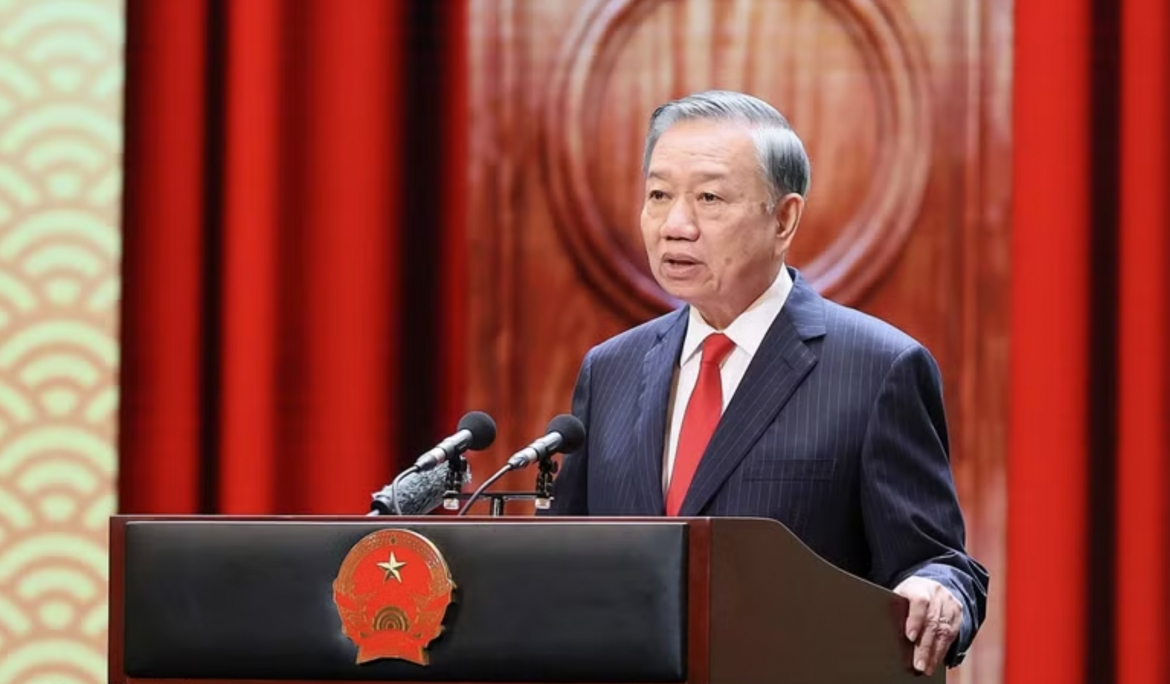
Vietnam’s top leader To Lam delivered a major address marking the eighty first anniversary of the country’s National Day this week, describing the moment as a turning point that has ushered Vietnam into an entirely new era of national development. Speaking at a ceremony held at the Ho Guom Opera House in Hanoi, the General Secretary of the Communist Party and President told the gathered delegates and international guests that this year’s celebration carried a distinctly different atmosphere from those before it.
In his address, Lam traced Vietnam’s modern history through several defining periods, from the era of independence following the 1945 declaration through the period of national reunification and later renewal. He said the recent Fourteenth National Party Congress had officially ushered the country into a new phase focused on building a wealthy, strong, and prosperous Vietnam, framing the current moment as a milestone comparable in significance to earlier turning points in the nation’s history.
Lam reflected on the historical weight carried by the National Day anniversary, recalling how each autumn draws the attention of millions of Vietnamese people back to the moment eighty one years ago when President Ho Chi Minh delivered the Declaration of Independence at Ba Dinh Square, formally announcing the birth of what is now the Socialist Republic of Vietnam. He said the words of that original declaration retain their full meaning despite the many changes the country has undergone since, continuing to serve as a unifying force for the Vietnamese people both at home and abroad.
Turning to the country’s role on the global stage, Lam emphasized the need for nations to pursue strategic proactiveness and deeper international integration amid what he described as an increasingly uncertain world. He called for greater dialogue and cooperation among nations, along with resolving disputes through the fundamental principles of international law and the United Nations Charter, positioning Vietnam as ready to serve as a bridge for cooperation between different international partners and blocs.
The president specifically noted Vietnam’s commitment to supporting a fair and equal multilateral system centered on the United Nations, stressing the country’s readiness to make increasingly substantive contributions toward addressing shared global challenges. This framing reflects Vietnam’s broader diplomatic strategy in recent years of positioning itself as a stable, cooperative partner capable of working across different geopolitical blocs rather than aligning exclusively with any single major power.
The ceremony itself carried significant symbolic weight beyond the speech alone. Lam and his spouse joined other senior officials and international representatives, including ambassadors from partner nations such as Uruguay, in a flag salute ceremony before the address. The evening concluded with a concert titled Vietnam, A New Era, reinforcing the celebratory and forward looking tone officials sought to establish for this year’s anniversary observance.
The National Day events also coincided with other significant administrative milestones, including a separate ceremony where Lam presided over the National Assembly’s resolution establishing Quang Ninh as a centrally governed city, during which he presented a first class Labour Order recognizing the local party organization, authorities, and residents of the northern province for their contributions.
As Vietnam moves forward from this year’s anniversary observance, Lam’s framing of a new development era sets an ambitious tone for the country’s stated economic and social goals in the years ahead. With growth targets aiming for double digit annual expansion and continued efforts to elevate the country’s standing in regional and global diplomacy, this year’s National Day speech serves as both a historical reflection and a marker for the priorities Vietnam’s leadership intends to pursue moving into the country’s next chapter of development.
