




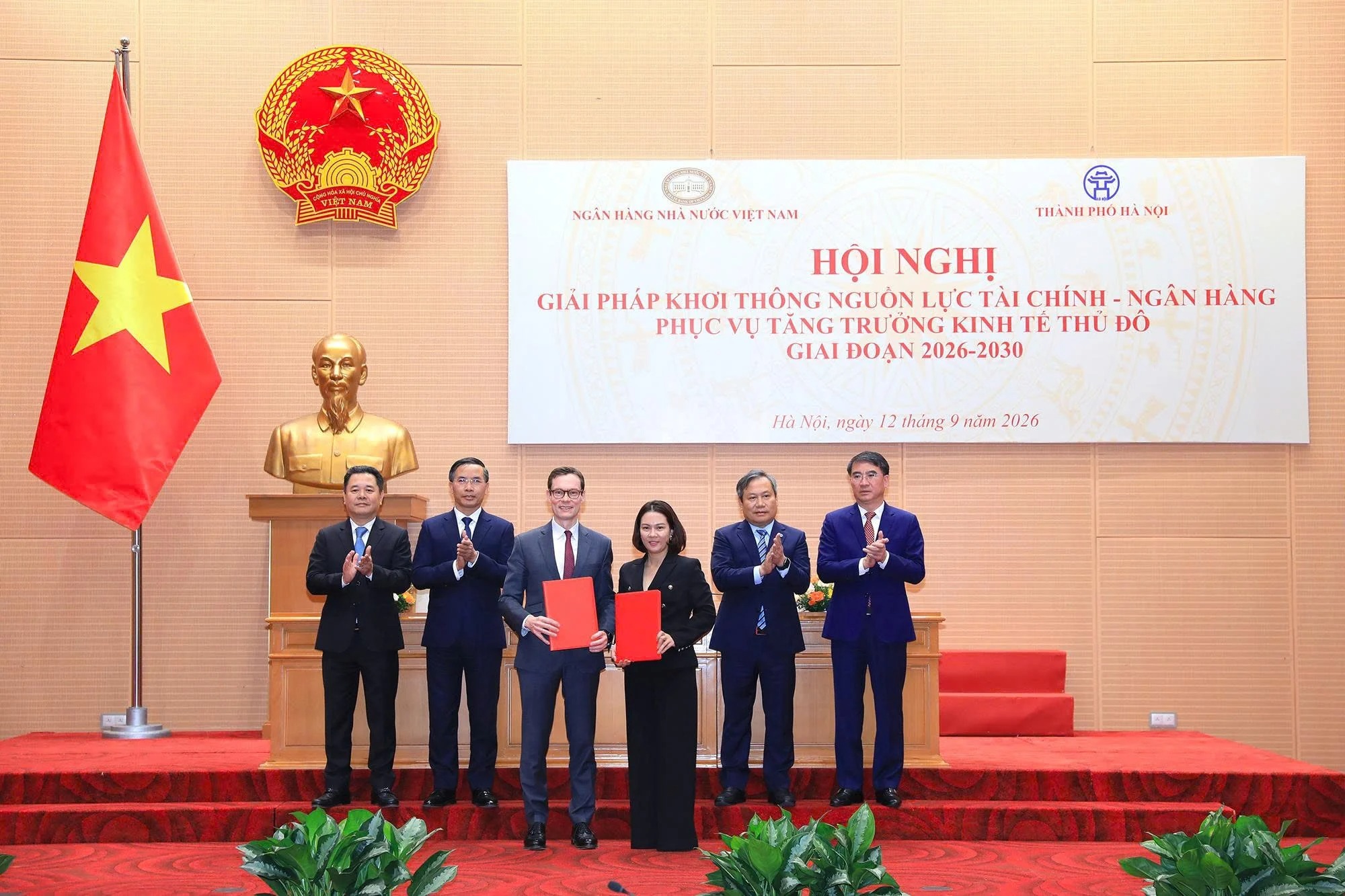
Vietnam’s government convened in the capital this week, with Hanoi leaders push growth target discussions dominating a regular government meeting where the Prime Minister called for accelerated economic reforms and investment as the country works to meet its ambitious 2026 growth goals.
Speaking at the meeting, the Prime Minister told officials that now is the time to accelerate and make breakthroughs with the highest determination, framing the coming months as a critical window for translating strong early year performance into a successful full year outcome.
The International Monetary Fund raised its forecast for Vietnam’s 2026 economic growth to 8.2 percent in August, a notable increase from the 7.1 percent projection issued in April, reflecting stronger than expected performance across trade, investment, and industrial output during the year’s first eight months.
This upgraded forecast provides encouraging context for Hanoi’s growth push, though officials have been careful to frame the improved outlook as a foundation to build upon rather than a guarantee, given the significant work still required to convert momentum into final year end results.
The Prime Minister specifically highlighted strong trade performance, robust foreign investment inflows, and solid industrial production figures from the year’s opening months as evidence that the country’s economic strategy has generated meaningful early momentum worth sustaining through the remaining months.
Alongside this optimism, officials acknowledged continued pressures facing economic management, including challenges connected to production and business activity, public investment disbursement rates, export performance, financial market conditions, and the livelihoods of segments of the population still recovering economically.
Consumer price data released around the same period showed widespread increases, with ten of eleven tracked consumer goods and services categories recording price increases in August, though food and catering services saw a modest decline, offering some relief within an otherwise broadly rising price environment.
Public investment disbursement has remained a persistent area of concern for Vietnamese economic planners, with officials repeatedly emphasizing the need to accelerate spending on approved infrastructure and development projects that can meaningfully contribute to overall economic growth figures.
Foreign investment has continued flowing into Vietnam throughout the year, reflecting international confidence in the country’s manufacturing capabilities and strategic position within regional and global supply chains, even as global economic conditions have presented various challenges for exporting nations.
Industrial production growth has provided a further pillar of support for this year’s economic performance, with manufacturing activity contributing significantly to the stronger than anticipated results that prompted international observers to revise their growth expectations upward during the year.
As the government intensifies its push toward meeting the 2026 growth target, attention will focus on whether the coming months can sustain the momentum built during the year’s first eight months. With the IMF’s upgraded forecast reflecting genuine confidence, officials in Hanoi now face the task of ensuring that promise translates into a successful final result before the year concludes.
