




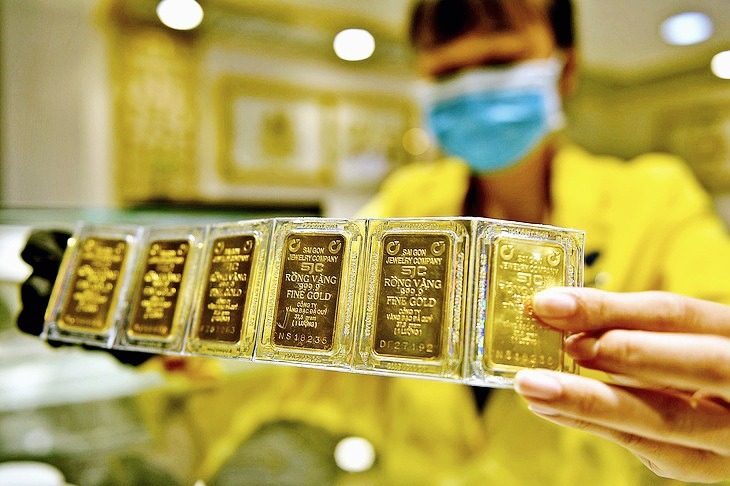
Vietnam’s gold market is experiencing sharp price movements on Saturday, October 3, with domestic prices continuing to react to changes in international gold markets. A Vietnam.vn report published for October 3 said domestic prices were fluctuating significantly and that market direction remained difficult to predict. The report also examined whether global gold prices could fall below 4,000 US dollars per ounce during the fourth quarter.
Gold prices in Vietnam are closely connected with international market movements, although domestic prices can also be affected by local supply, demand and trading conditions. When international gold prices move quickly, Vietnamese buyers and sellers often adjust their expectations and prices. However, domestic prices do not always move by exactly the same amount.
Gold has traditionally been an important asset for Vietnamese households. Some people buy gold as a form of savings, while others purchase it for weddings, gifts or long-term financial planning. This creates a domestic market that can respond differently from financial markets dominated by professional investors.
International gold prices have been affected by several factors during 2026. Investors have watched interest rates, currency movements, energy prices and geopolitical developments. Gold is often viewed as a store of value during periods of uncertainty, but its price can also fall when investors move toward higher-yielding assets.
The value of the US dollar is another important factor. Gold is generally priced internationally in dollars, so changes in the dollar can influence how expensive gold becomes for buyers using other currencies. Vietnamese consumers therefore experience the effects of global currency movements even though their purchases are made in Vietnamese dong.
Domestic demand is also important. If Vietnamese consumers reduce gold purchases because prices are high, local traders can experience weaker demand. If buyers expect prices to rise further, however, demand can increase as people try to purchase gold before prices move higher.
The market can therefore become difficult to predict during periods of rapid price movement. A sharp increase can encourage buying from people who fear missing further gains, while a sudden decline can cause some buyers to delay purchases. Traders must watch both international developments and domestic consumer behaviour.
Vietnam’s gold market also includes several different forms of gold products. Consumers can purchase jewellery as well as investment-focused gold products. Jewellery demand can respond to cultural events and household spending, while investment demand is more closely connected with expectations about prices and financial conditions.
The fourth quarter could be particularly important because global economic conditions remain uncertain. Energy prices, inflation and central-bank decisions can influence investor demand for gold. If inflation remains high, some investors may continue to seek protection through precious metals. If interest rates remain attractive, however, other assets may become more appealing.
The possibility of gold falling below 4,000 dollars per ounce is therefore being watched by market participants. Forecasts remain uncertain because gold prices can respond quickly to new economic or geopolitical information. A prediction should not be treated as a guaranteed outcome.
For Vietnamese consumers, the most immediate concern is the price available in local markets. People buying jewellery or investment gold need to consider both the quoted price and the difference between buying and selling prices. A person who buys at a high price may face a loss if they need to sell quickly after a decline.
Gold traders also have to manage risk when prices move rapidly. Large price swings can make inventory management more difficult because the value of stock can change within a short period. Retailers must balance customer demand with the risks associated with holding large quantities of precious metals.
The October 3 market therefore begins the month with considerable uncertainty. Domestic prices are responding to international movements, while Vietnamese demand remains an important factor. Consumers, traders and investors will continue watching global gold prices and currency markets to determine where domestic prices may move next.
For Vietnam’s economy, gold remains a visible part of household financial behaviour. Saturday’s price movements show how global economic conditions can quickly influence domestic markets. The direction of gold prices during the rest of the fourth quarter will depend on inflation, interest rates, currencies, investor demand and broader economic developments.
