




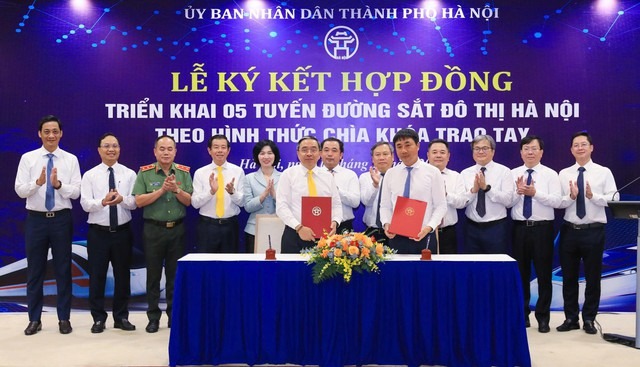
Hanoi has signed contracts for five new metro lines as the Vietnamese capital works to improve public transport and reduce road congestion. The agreements cover a planned network of about 253.5 kilometres, with the city aiming to complete the lines and begin full operations by 2030. The projects are expected to connect central areas with new urban districts, transport hubs and other important destinations.
The contracts were signed on October 15 by the Hanoi Metropolitan Railway Management Board and a consortium led by Vinhomes and SGC Investment and Construction. The agreement covers the design, purchase of equipment, construction, installation, testing and handover of the railway system. The five lines are numbered 1, 2, 8, 10 and 14.
City officials say the network should help increase passenger capacity and reduce the need for private vehicles. Hanoi has experienced growing pressure on its roads as its population and urban areas expand. More reliable public transport could give commuters another option and help reduce traffic delays during busy hours.
The planned system is also expected to use modern signalling and train-control technology. Officials have stressed the need for common technical standards across the lines so that equipment and services can work together. They have also called for strict safety checks and careful management of costs throughout construction and later operations.
The consortium has said trial operations could begin in late 2029, ahead of a target for full service by the end of 2030. The combined investment is estimated at nearly 900 trillion Vietnamese dong, excluding land-clearance costs. The scale of the plan means that delays, cost increases or construction problems could have a major effect on the timetable.
If completed as planned, the network could change how people travel around Hanoi. Its success will depend on more than laying tracks: stations must be accessible, services must be reliable, and connections with buses and other transport must work well. The coming years will show whether the ambitious programme can deliver a practical improvement in daily travel.
