




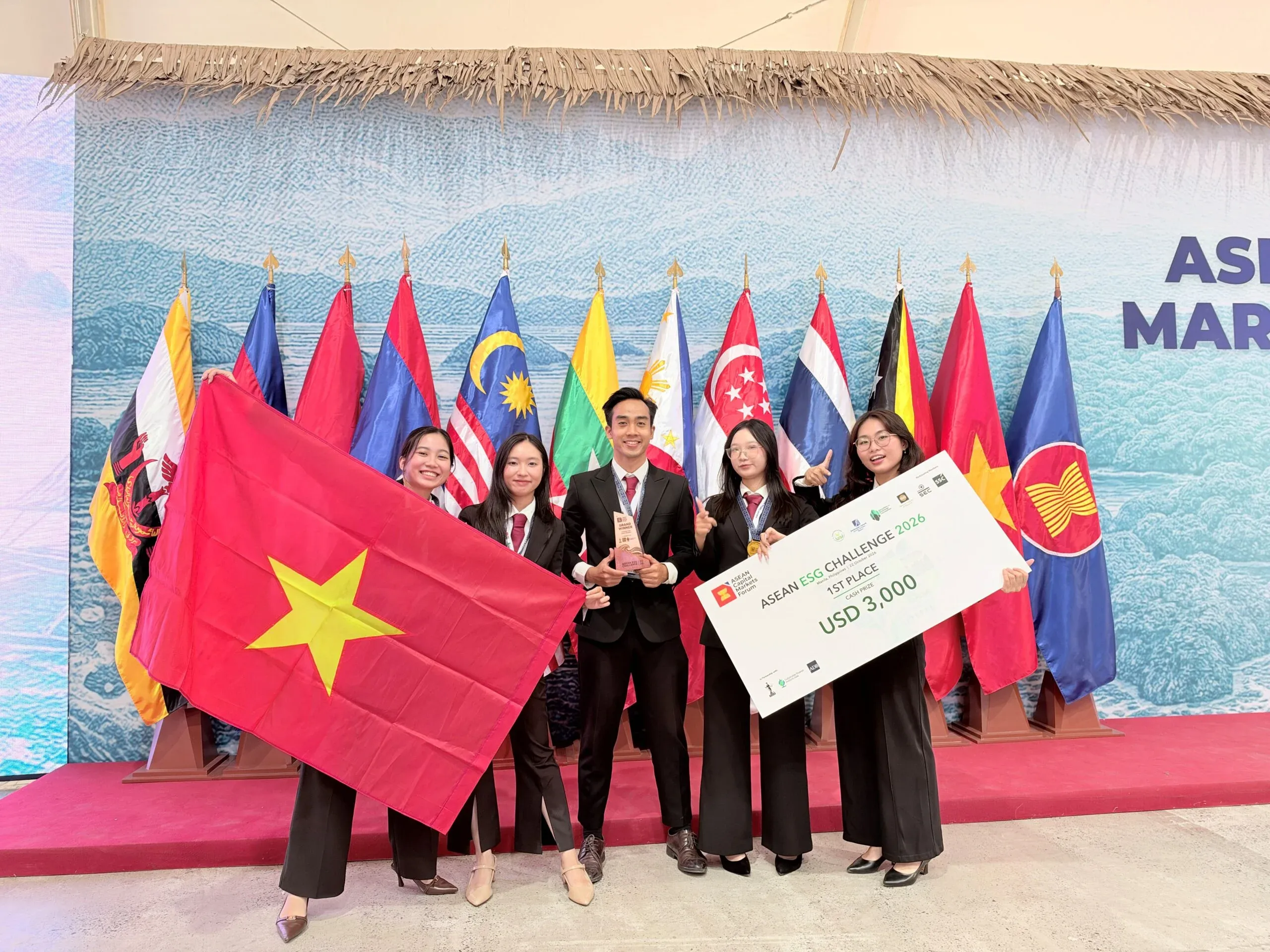
A team of five Vietnamese university students has won the ASEAN ESG Challenge 2026 in Manila, achieving first place in a regional competition focused on environmental, social and governance issues. The victory placed Vietnam ahead of competing student teams from across Southeast Asia and highlighted the growing involvement of young people in discussions about sustainable development and responsible business practices. The competition brought together university students to examine how businesses and financial institutions can address environmental and social challenges.
The ASEAN ESG Challenge is the first regional competition of its kind for university students, organised by the ASEAN Capital Markets Forum with support from the Institute of Chartered Accountants in England and Wales. Its focus is on environmental, social and governance principles, commonly known as ESG. These principles are increasingly important in business because companies are expected to consider their environmental impact, treatment of employees and communities, and standards of corporate management.
The final round brought together six student teams representing Cambodia, Malaysia, the Philippines, Singapore, Thailand and Vietnam. The competition was hosted by the Securities and Exchange Commission of the Philippines, which is chairing the ASEAN Capital Markets Forum in 2026. Teams were assessed on their understanding of ESG-related issues and their ability to develop ideas connected to sustainable finance and responsible business activity. Malaysia and Singapore finished as joint runners-up, while Cambodia, the Philippines and Thailand shared third place.
Vietnam’s winning team was selected from among leading participants in the national Vietnam ESG Challenge. Their achievement demonstrates how universities and student competitions can help develop knowledge about sustainability and the changing expectations facing businesses. As governments and companies across Southeast Asia pay greater attention to sustainable investment, young professionals with knowledge of ESG issues may become increasingly valuable. The result also gives Vietnamese students a stronger regional platform to demonstrate their skills and contribute to future discussions about responsible economic development.
