




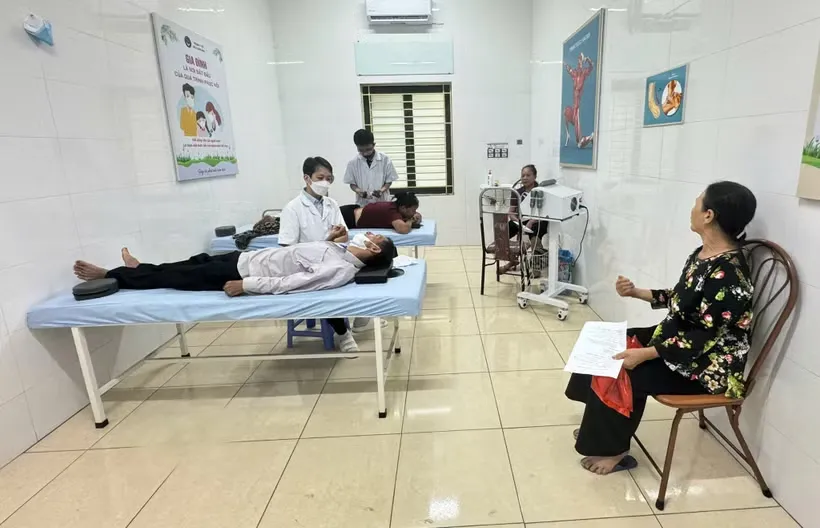
Hanoi is expanding community-based healthcare and rehabilitation services to improve support for people with disabilities, older residents and other vulnerable groups. The capital is placing greater emphasis on providing care closer to people’s homes instead of relying only on large hospitals and specialised institutions. The approach is intended to help residents receive regular treatment, regain independence and participate more fully in community life. It also aims to reduce the pressure on family members who often provide long-term care without enough professional support.
One example comes from Xuan Mai commune, where a community rehabilitation programme has helped residents who previously struggled to access regular treatment. Tran Thi Quyen, a local woman who suffered a cerebral haemorrhage more than three years ago, was left partly paralysed and unable to walk. Although hospital treatment stabilised her condition, she continued to face difficulties with everyday movement. The commune later introduced a community-based rehabilitation model that provided guided physical therapy, acupuncture and acupressure at the local health station. After receiving regular support, Quyen said she was able to cycle to the station independently for further rehabilitation.
The programme has also reached hundreds of other residents. Xuan Mai is home to around 1,740 people with disabilities and vulnerable individuals. Since the model began in July 2026, more than 500 people have been examined and screened, allowing health workers to identify their needs and provide suitable support. Similar initiatives are operating in other parts of Hanoi. In Tay Mo ward, local authorities have worked with the Hanoi Rehabilitation Hospital and established a volunteer network. Screening identified 2,756 residents with disabilities, including 296 who required rehabilitation services. In Phuc Thinh commune, 30 people entered rehabilitation programmes after an assessment of 166 residents, with around 80 per cent showing clear improvement.
Hanoi is also developing community-based services for people with mental health conditions. An integrated care complex at Hanoi Mental Health Care and Rehabilitation Centre No. 1 in Quang Oai commune serves more than 800 patients. The centre has standardised treatment and admission procedures and introduced digital tools to monitor nutrition, food safety and recovery progress. It is also producing educational materials and videos to help families support patients after they return home. Health officials say continued family involvement is essential because recovery often requires support long after a person leaves a medical facility.
The city wants to make community care a lasting part of its social welfare system. Under Plan No. 418, issued in October 2026, Hanoi aims to integrate digital social welfare records for all vulnerable residents into the national population database by 2030. Officials say this could help local authorities identify needs more accurately and coordinate services across different institutions. However, the approach will require stable funding, trained staff, suitable equipment and stronger cooperation between hospitals and local health stations. By bringing rehabilitation and mental health support closer to residents, Hanoi hopes to improve quality of life while giving families and communities a stronger role in long-term care.
