




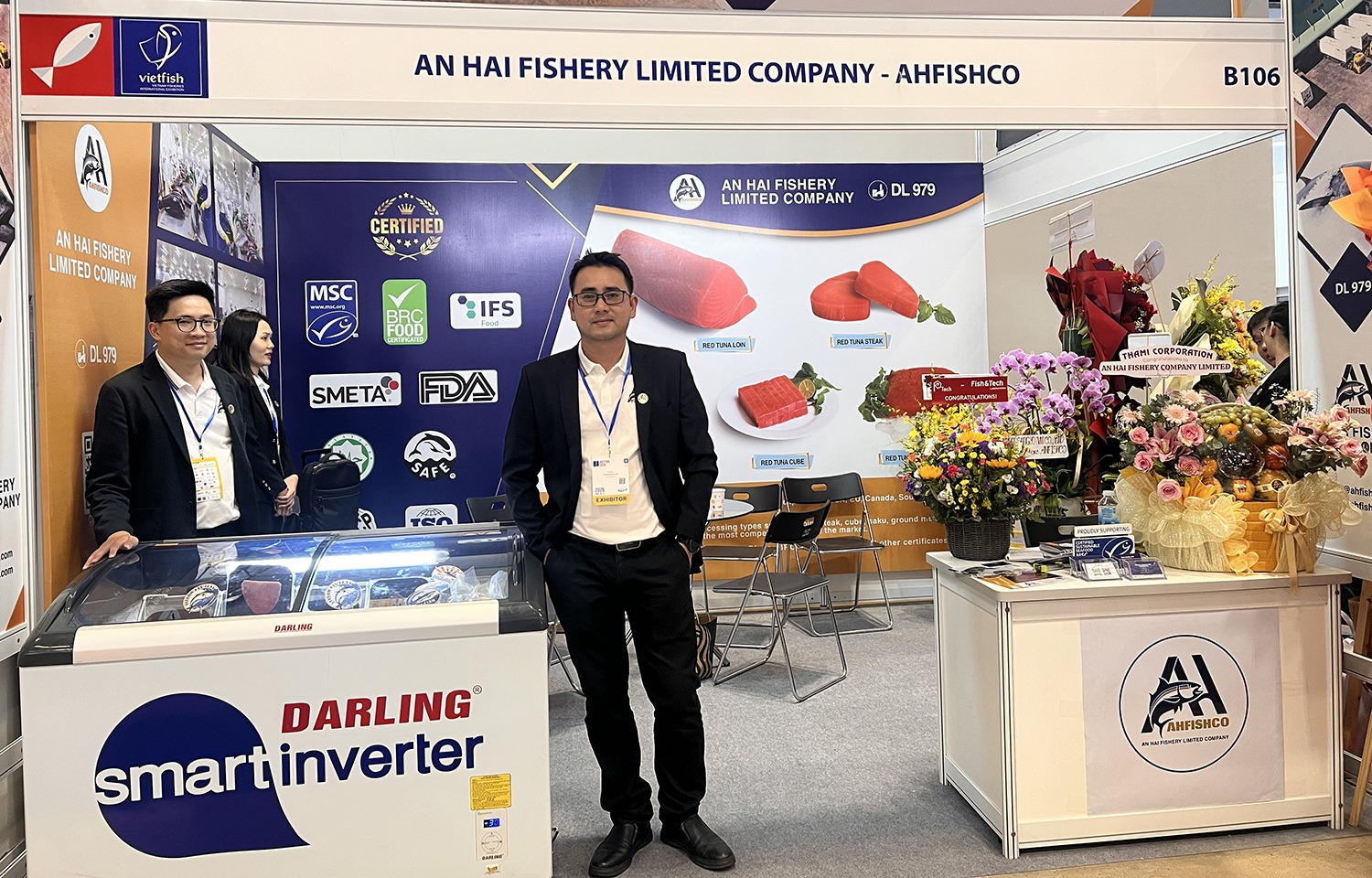
Vietnamese seafood processor An Hai has significantly increased its production capabilities after opening a new tuna-processing facility in central Vietnam. The investment marks an important step in the company’s growth strategy as it seeks to strengthen exports and expand into new international markets.
The newly opened Nhon Hoi 2 plant can process around 100 metric tons of raw material each day. Combined with the company’s existing Nhon Hoi 1 facility, An Hai can now process approximately 200 metric tons of raw tuna daily. This volume can be converted into around 100 metric tons of finished tuna products every day.
Company representatives shared details of the expansion during the 2026 Vietfish International Fisheries Exhibition. The new facility effectively doubles the company’s raw material processing capacity and supports its goal of meeting rising demand from customers around the world.
An Hai is one of Vietnam’s leading exporters of frozen yellowfin tuna products. The company offers a wide range of processed tuna items, including loins, steaks, cubes, saku, ground meat, and portions. These products are supplied to food service operators, distributors, and retail customers across multiple regions.
The company reported sales of approximately USD 136 million in 2025. Earlier, management set a target of USD 150 million in revenue for 2026. According to company officials, that goal has already been achieved, even with several months remaining in the year.
With the revenue target reached ahead of schedule, An Hai is now focusing on maintaining strong sales performance while expanding its product presence in additional international markets. The company believes broader market access will support long-term growth and reduce dependence on any single region.
The United States remains the company’s largest export market. Around 42 percent of An Hai’s sales come from U.S. customers. Europe represents another important destination, accounting for roughly 20 to 25 percent of total sales. Other export markets include Russia, Japan, and several countries in South America.
In recent years, however, the European market has become more challenging. Stricter regulations related to raw material sourcing, vessel documentation, and product traceability have increased compliance requirements for seafood exporters.
These rules require processors to provide detailed information about the origin of fish and the vessels involved in harvesting them. As a result, An Hai has had to carefully select suppliers that meet the necessary standards and documentation requirements.
Because of these stricter conditions, the company has increased its efforts to diversify export destinations. Management has placed greater focus on emerging opportunities in Russia and South America. The company has recently entered markets such as Costa Rica and Brazil and is preparing for expansion into Argentina.
This strategy is designed to create a broader customer base and reduce risks associated with changing regulations in specific regions. By entering new markets, An Hai hopes to strengthen its global presence and create additional sales opportunities for its growing production capacity.
The United States continues to provide stable opportunities for established seafood processors that already meet regulatory standards. Company officials noted that both of An Hai’s processing facilities are registered with the U.S. Food and Drug Administration, helping support access to the market.
While tariffs have influenced trade conditions, company leaders said the differences in tariff rates compared with competing exporting countries have not been significant enough to weaken An Hai’s position in the United States.
The company also benefits from long-term relationships with American customers. These partnerships have been built over many years and contribute to continued demand for An Hai products. Some buyers are willing to pay premium prices because they trust the company’s product quality and reliability.
Industry observers say the opening of the new plant places An Hai in a stronger position to compete globally. The increased production capacity, combined with market diversification efforts and established customer relationships, provides a solid foundation for future growth.
The An Hai Tuna Expansion highlights Vietnam’s growing role in the global seafood industry. With higher processing capacity and access to a wider range of markets, the company is well positioned to support rising international demand for premium tuna products while continuing its export growth strategy.
