




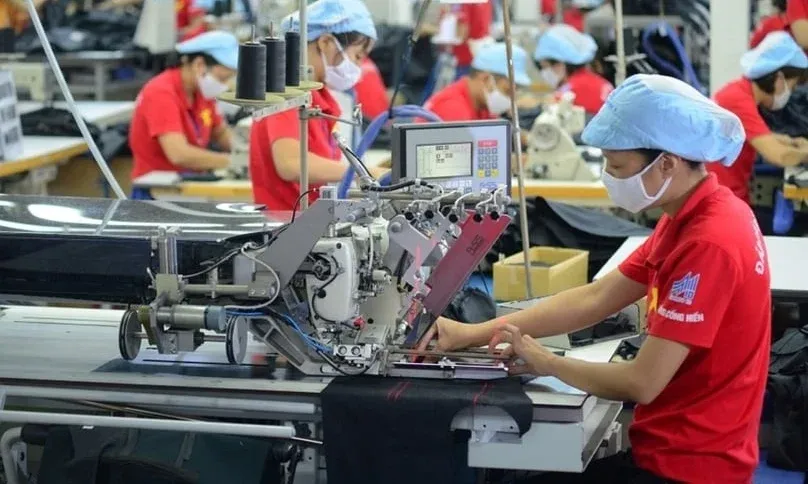
Vietnam’s manufacturing sector extended its expansion in August, with the closely watched S&P Global Manufacturing Purchasing Managers Index climbing to 53.3, up from 52.9 in July and marking its highest reading since February. The improvement signals continued strengthening in factory operating conditions, with the index moving further above the fifty point threshold that separates expansion from contraction in the widely tracked survey.
Manufacturing output rose for a sixteenth consecutive month in August, and did so at its fastest pace in more than two years, according to the S&P Global data. That extended streak of output growth underscores the sustained resilience of Vietnam’s factory sector, which has continued expanding steadily even as global trade conditions have faced periodic disruption tied to geopolitical tensions in the Middle East and elsewhere.
New orders expanded at their strongest rate since October of last year, providing clear evidence of robust underlying demand for Vietnamese manufactured goods both domestically and internationally. That acceleration in new business represents a particularly encouraging signal for the sector’s near term outlook, since new orders typically serve as a leading indicator for future production and export activity in the months ahead.
Despite the broadly positive headline figures, employment within the manufacturing sector continued showing signs of weakness, falling for the fifth time in the past six months. Companies surveyed attributed the decline primarily to worker retirements and reduced reliance on temporary staffing arrangements, rather than any fundamental pullback in production capacity or business confidence. This pattern of rising output alongside falling employment suggests manufacturers may be achieving productivity gains that reduce the need for proportional workforce expansion.
On pricing, input cost inflation eased from the eleven month peak recorded in July, offering some relief to manufacturers who had faced mounting pressure from higher raw material and energy costs in recent months. Output price growth similarly moderated, extending a four month trend of softer selling price inflation that suggests manufacturers may be finding it somewhat easier to manage their cost structures compared to earlier in the year.
The August reading builds on a broader pattern of strengthening manufacturing conditions that has developed over recent months. July’s reading of 52.9 already represented an improvement from June’s 51.8, meaning the sector has now logged consecutive months of accelerating expansion, reinforcing the view that Vietnam’s factory base has moved onto genuinely more solid footing compared to earlier periods this year when growth appeared more tentative.
Vietnam’s manufacturing sector remains central to the country’s broader export led growth model, which has helped drive the economy’s rapid expansion in recent years. The World Bank recently reclassified Vietnam as an upper middle income economy earlier this year, citing strong export performance and sustained GDP growth as key factors behind that milestone upgrade, a trajectory that continued manufacturing strength helps reinforce.
As Vietnam moves further into the second half of 2026, sustained manufacturing momentum will likely play an important role in determining whether the country can meet its ambitious full year growth targets. With new orders accelerating and output continuing its extended growth streak, the sector appears well positioned to contribute meaningfully to overall economic performance, even as businesses continue navigating employment challenges and monitoring cost pressures tied to ongoing global economic uncertainty.
