




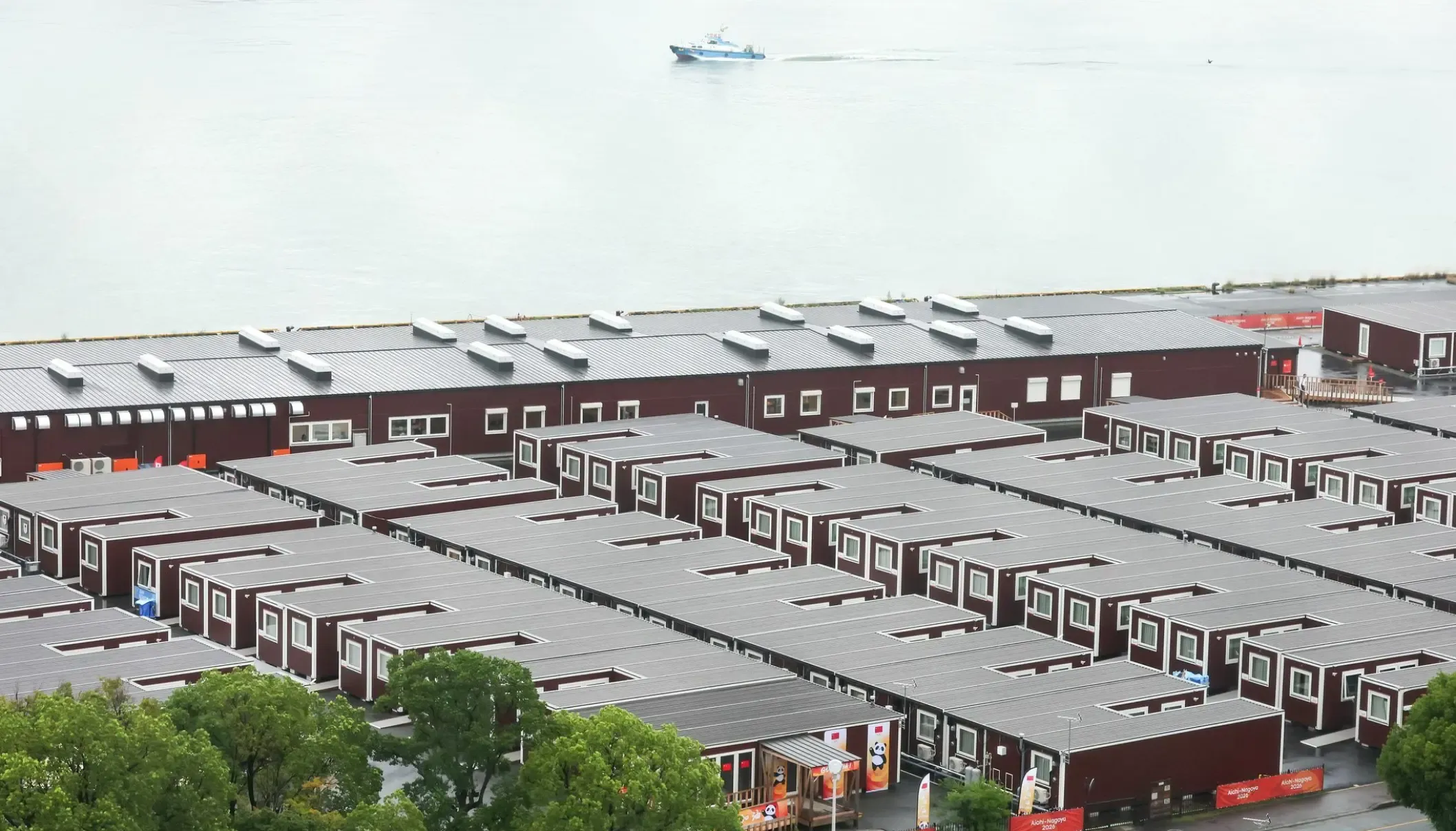
The 2026 Aichi-Nagoya Asian Games faces mounting criticism over athlete accommodations just days before its official opening ceremony this Saturday, with delegations from across Asia complaining about severe room shortages and poor conditions within a temporary container housing complex. Vietnam’s own delegation joins athletes from dozens of nations navigating this unusual housing arrangement, which organizers adopted specifically to cut costs and reduce the event’s environmental footprint.
Rather than building a traditional dedicated athletes’ village, Japanese organizers arranged a decentralized accommodation plan spanning three distinct components, hotels across Aichi Prefecture, a chartered cruise ship docked at Nagoya Port, and roughly two hundred temporary container units at Garden Pier designed to house approximately two thousand athletes and officials. That unconventional approach has drawn sharp criticism as the games approach, with reports describing cramped rooms where multiple athletes share single toilets and shower facilities.
The problem has been significantly compounded by attendance numbers far exceeding original projections. Organizers initially planned for roughly fifteen thousand total participants, but the Olympic Council of Asia’s final registration list published in late August exceeded seventeen thousand people, including approximately eleven thousand athletes alongside six thousand officials and support staff. That unexpected surge in registered participants left the fixed capacity container and cruise ship housing badly short of actual demand.
Representatives from all forty five National Olympic Committees under the Olympic Council of Asia raised the housing shortage directly during recent chef de mission meetings, with Korean officials specifically noting that when an Olympic committee had been promised one hundred container rooms, the actual available inventory sometimes fell short by as many as twenty rooms. That gap has forced several national delegations to scramble for alternative accommodation entirely outside the official games housing footprint.
Beyond the sheer shortage of available rooms, the physical condition of the container units themselves has drawn pointed criticism from athletes already staying there. A South Korean men’s basketball player posted social media video highlighting problems with the housing, while Chinese media representatives present in Nagoya described conditions as genuinely poor, citing situations where three people shared a single toilet and shower within the converted shipping container spaces.
Aichi Governor and organizing committee president Hideaki Omura initially responded to the unexpected surge in participants by suggesting the organization lacked sufficient manpower or budget to accommodate everyone, stating that additional arrivals beyond registered capacity would need to resolve their own housing arrangements. That position drew immediate backlash, prompting the Olympic Council of Asia and Japanese organizers to reverse course days later, issuing a joint statement promising that all properly registered delegates would receive appropriate accommodation, even as no new registrations would be accepted going forward.
Not every reaction to the container housing has been entirely negative. Para-badminton athlete Noriko Ito described the space as making her feel genuinely at home, while some athletes have highlighted the complex’s additional amenities, including a delegation headquarters, dedicated service center, communal dining area, and outdoor social space designed for cultural programming between competition periods. These more positive accounts suggest the housing controversy, while genuine, may not uniformly reflect every athlete’s actual experience within the complex.
As the Saturday opening ceremony approaches, with certain sports including football, basketball, and table tennis already underway ahead of the formal ceremonial launch, organizers continue working to address remaining accommodation gaps. For delegations already navigating the pressure of high level continental competition, this housing controversy adds an unwelcome additional challenge just as athletes across every participating nation prepare to compete for medals across the games’ full spectrum of events.
