




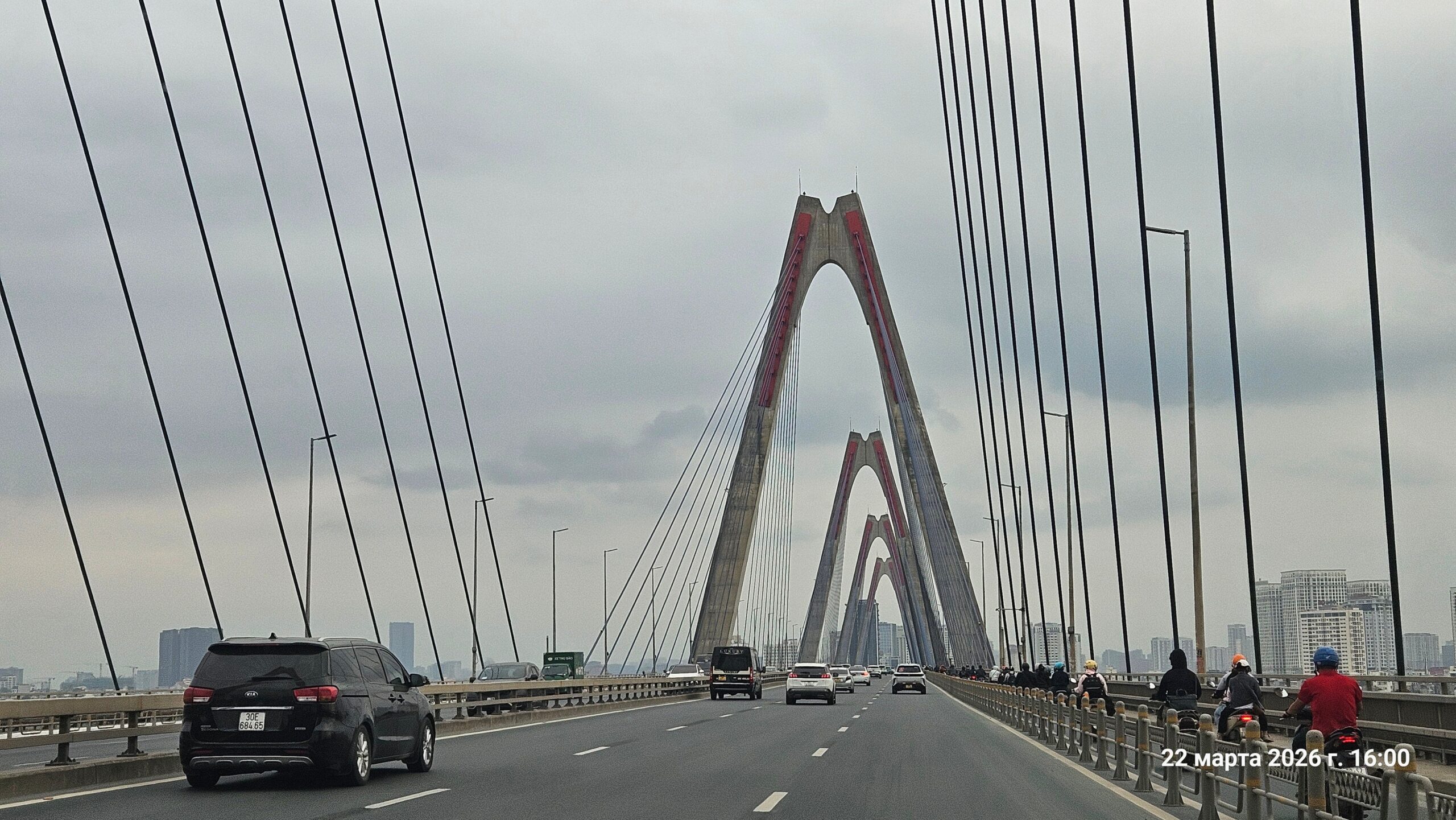
Hanoi has begun a new traffic organisation trial on Nhat Tan Bridge from Sunday, September 27, as the capital works to improve road safety and reduce congestion. The trial is scheduled to continue until March 27, 2027. The plan was announced by the Hanoi Department of Construction and introduces new traffic arrangements for vehicles using the bridge.
Nhat Tan Bridge is an important transport connection in Hanoi. It carries large numbers of vehicles and links different parts of the capital with routes toward the airport and other areas.
Traffic congestion is a major issue in Hanoi because of the city’s growing population and increasing number of vehicles. Busy roads can become particularly difficult during peak travel periods, creating longer journeys and increasing pressure on major bridges.
The new trial is designed to improve the organisation of traffic rather than simply increase road capacity. Vehicles using Nhat Tan Bridge will follow the instructions shown through road signs and painted lane markings.
Drivers will also be expected to maintain safe distances between vehicles. Authorities are using the trial to observe traffic conditions and determine whether the new arrangements can improve movement across the bridge.
Traffic management trials allow city authorities to test changes before deciding whether they should become permanent. Officials can study vehicle movements, congestion levels and safety conditions during the trial period.
The six-month period provides enough time to observe traffic during different conditions. Weekday commuting, weekend travel, holidays and changes in traffic volume can all affect how a road system performs.
Nhat Tan Bridge is especially important because it forms part of Hanoi’s wider transport network. Traffic arriving from surrounding areas can place significant pressure on roads leading into the capital.
Improving traffic flow across the bridge can therefore have effects beyond the bridge itself. If vehicles move more smoothly, congestion on connecting roads may also be reduced.
However, traffic management depends heavily on driver behaviour. Road signs and lane markings can only work if drivers follow them correctly. Authorities are therefore asking motorists to pay attention to the new arrangements and maintain safe distances.
The trial also gives the city an opportunity to identify problems. If a particular lane arrangement creates unexpected congestion, officials can study the situation and make adjustments.
Traffic safety is another important part of the plan. Bridges can become dangerous when vehicles move too closely together or change lanes suddenly. Clear lane markings and speed guidance can help reduce confusion.
For residents, the main change is that normal travel patterns may be slightly different from previous arrangements. Drivers who regularly use Nhat Tan Bridge will need to pay attention to the new signs from September 27.
The trial is expected to remain in place until March 27, 2027. This means that the authorities will have several months to collect information and evaluate the system.
Hanoi has been developing its transport infrastructure as the city continues to grow. New roads, bridges and traffic systems are intended to support economic activity and make daily travel easier.
The Nhat Tan trial is a smaller but practical part of that wider effort. Instead of waiting for major construction projects, traffic authorities can sometimes improve movement by changing how existing road space is organised.
For drivers, the most important point is to follow the signs and markings introduced under the new plan. Safe distances should also be maintained while crossing the bridge.
The September 27 start marks the beginning of a six-month test rather than a final permanent traffic arrangement. Officials will use the results to assess how well the system works.
For Hanoi, the goal is straightforward: safer traffic and less congestion on an important bridge. The success of the trial will depend on road conditions, driver behaviour and the ability of authorities to adjust the system when necessary.
