




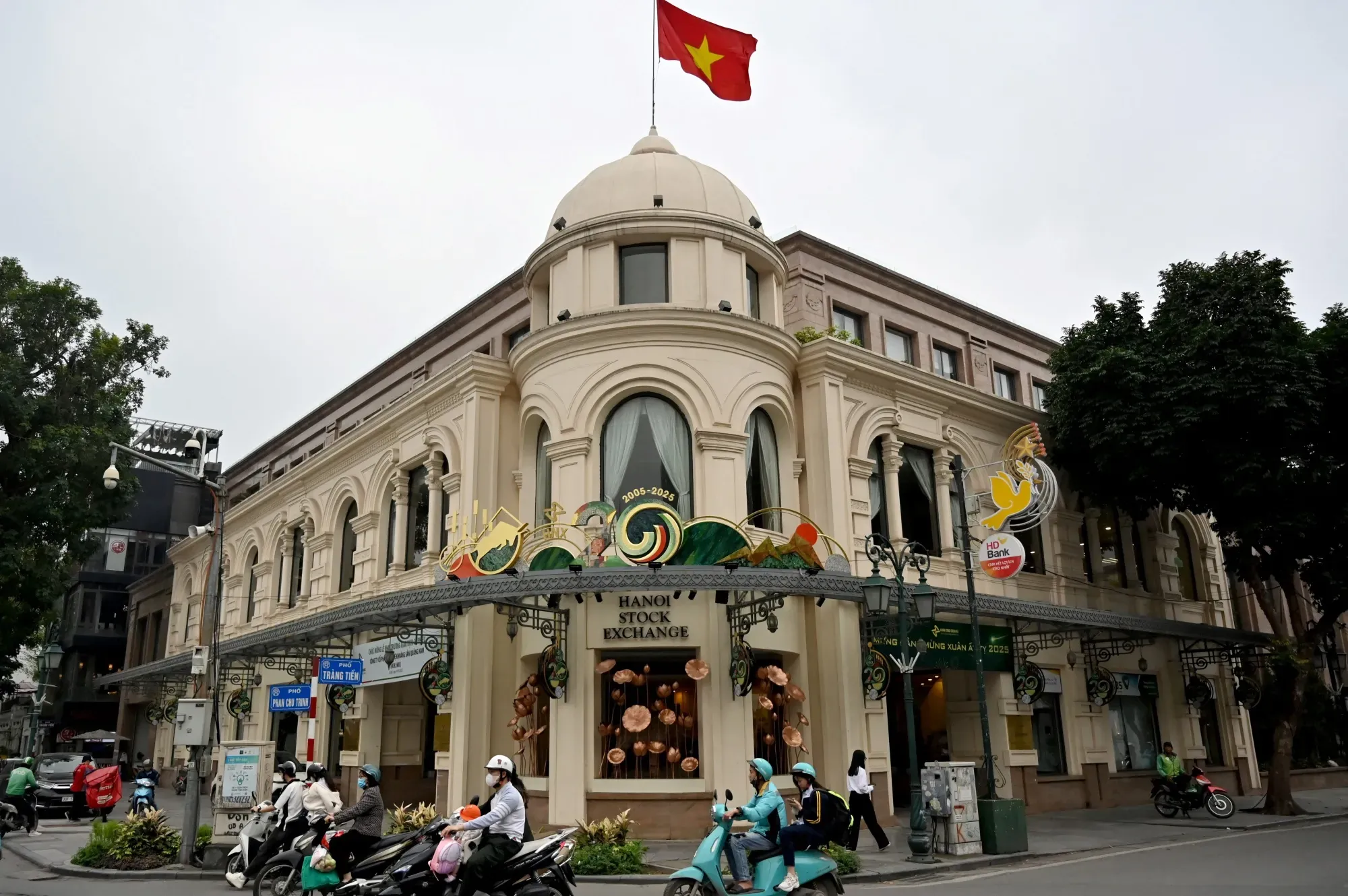
Vietnam’s stock market remains under close attention as investors assess heavy selling pressure and recent movements in major listed companies. The latest market report showed the VN-Index falling sharply, while trading activity remained high. The movement has increased focus on investor sentiment and the performance of large companies listed in Vietnam.
The VN-Index closed at 1,775.09 points after losing 26.56 points. The HNX-Index also declined, falling 3.68 points, or 1.33 percent, to 272.77 points. More than 690 million shares were traded across the two main exchanges, with total trading value reaching about 17.3 trillion Vietnamese dong, equal to roughly 663.6 million US dollars.
The fall showed that selling pressure was spread across several parts of the market. Large companies played an important role in the movement, with major shares in the Vingroup ecosystem among those weighing on the index.
The performance of large companies can have a strong effect on Vietnam’s stock market. When major stocks fall, the overall index can decline even if some smaller companies perform better. This is because large companies often have a significant share of the market’s total value.
The latest decline also came with relatively high trading activity. A large trading value means that many investors were willing to buy and sell shares even while prices were falling. High liquidity can make it easier for investors to change positions quickly, but it can also increase the speed of market movements.
Market pressure can come from many sources. Investors may react to company results, economic data, interest rate expectations or developments in international markets. Vietnam’s economy is highly connected to global trade, so international conditions can also influence local investor confidence.
The market’s performance is closely watched by businesses because stock prices can affect investor confidence and access to capital. A stable market can support company plans, while sharp movements can create uncertainty.
For individual investors, falling markets can create both risks and opportunities. Investors who own shares may see the value of their holdings decline. Others may look for companies whose prices have fallen but whose long-term business performance remains strong. However, short-term market movements do not guarantee future results.
Vietnam’s stock market has expanded as the country’s economy has grown and more companies have entered the capital market. The market now plays an important role in investment and business financing.
The recent selling pressure shows that investor confidence can change quickly. Even when economic growth remains positive, stock prices can fall because investors react to expectations about future conditions.
Trading activity will therefore remain important to watch in the next sessions. If selling continues at high levels, the market could remain under pressure. If buying interest returns, major indexes could stabilise.
The performance of large companies will also remain important because their share movements can influence the wider index. Investors will likely pay attention to financial results, company announcements and broader economic conditions.
The September market movement does not by itself show the long-term direction of Vietnam’s economy. Stock markets often experience short-term changes that do not perfectly reflect economic growth or company performance.
For Hanoi and the wider Vietnamese business community, the market remains an important source of information about investor confidence. The latest fall shows that investors are currently responding to strong selling pressure, while the high trading value shows that activity remains substantial.
The coming sessions will provide more information about whether the pressure continues or whether buyers return to the market. For now, the focus remains on major stocks, trading liquidity and the wider economic factors influencing investor decisions.
