




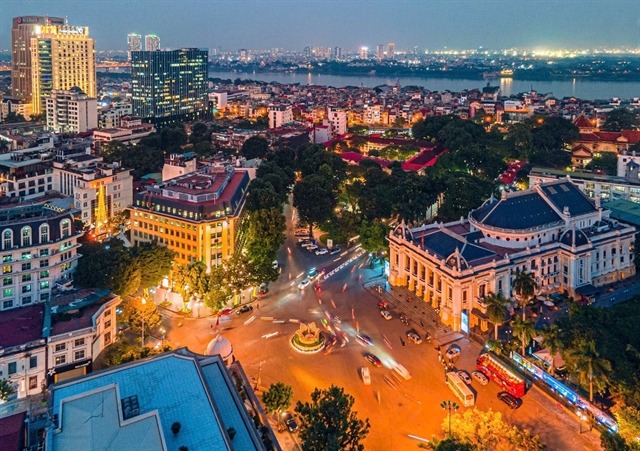
Hanoi’s economy recorded estimated growth of 10.02 per cent in the third quarter of 2026, marking the capital’s first double-digit quarterly expansion of the year. The result reflects stronger activity across services, industry and construction, according to figures released by the municipal government. The performance offers a positive sign for the capital’s economic outlook as local authorities continue efforts to maintain growth and attract investment. However, the city still faces the challenge of meeting its full-year economic targets.
During the first nine months of 2026, Hanoi’s gross regional domestic product grew by 8.85 per cent compared with the same period last year. That was higher than the 7.92 per cent recorded during the first nine months of 2025, although it remained below the city’s target of 9.73 per cent for the period. The figures suggest that economic activity has strengthened, but further progress will be needed to reach the growth level planned by local authorities.
The services sector was one of the main contributors to the expansion. Financial, banking and insurance activities recorded strong growth, while professional and technical services also performed well. Wholesale and retail trade expanded as businesses continued to supply goods and services to consumers. Transport, storage, tourism and other support activities also contributed to the city’s economic performance. These results underline the importance of services to Hanoi’s wider development.
Industry and construction also supported growth during the quarter. Construction activity increased as infrastructure and development projects continued, helping create demand for materials, labour and related services. Industrial expansion can also support employment and provide opportunities for businesses involved in manufacturing and supply chains. Continued investment in infrastructure is important for a growing capital because transport, utilities and public facilities help businesses operate more efficiently.
Despite the encouraging quarterly figures, maintaining strong growth will require continued effort. The city needs to improve its investment environment, support businesses and address obstacles that can delay development projects. Officials must also ensure that economic expansion produces practical benefits for residents, including jobs, better services and improved infrastructure.
Hanoi’s latest performance shows that the capital has the capacity to achieve rapid growth when several economic sectors expand together. The next challenge is to sustain that momentum through the final quarter of the year. Progress will depend on domestic demand, investment activity, business confidence and the effective delivery of development plans. The city’s results will therefore remain an important indicator of Vietnam’s wider economic performance.
