




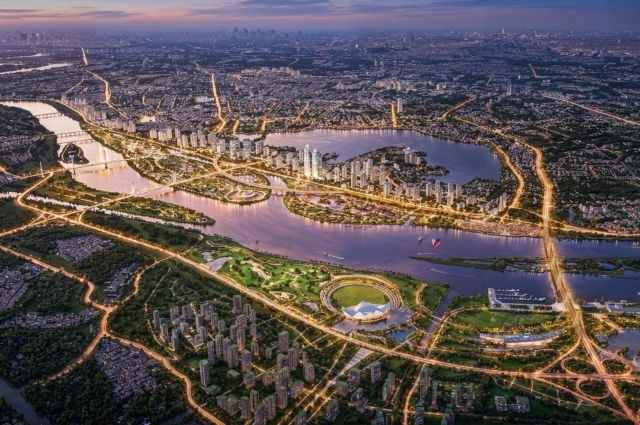
Hà Nội is preparing for a new stage of growth under a 100-year plan for the capital. The vision aims to reshape the city, improve daily life and support long-term economic growth. It also calls for new urban centres, better transport links and the renewal of old neighbourhoods.
Dr. Đào Ngọc Nghiêm, Vice President of the Việt Nam Urban Development Planning Association and a former head of the city’s planning department, said the plan marks a major shift in how Hà Nội will grow. He stressed that the city must turn its long-term goals into clear plans and real projects.
Hà Nội has gone through nine major rounds of planning. Each one has reflected changes in the country’s economy, the city’s role and its size. Soon after peace was restored, President Hồ Chí Minh reviewed a capital plan in 1961. He called for planning to look ahead and avoid costly work that might later need to be torn down.
Later plans brought new ideas as the city and the country changed. The 1973 plan focused on Hà Nội’s role during the push for national reunification. By 1998, planners were looking at growth on both sides of the Red River. In 2003, the creation of Long Biên District marked a major step in the city’s move across the river.
The new plan sets a longer goal than past plans, which often looked 40 or 50 years ahead. It breaks the vision into three stages: a short-term period to 2035, a medium-term period to 2065 and a long-term phase beyond that.
A key change is the move from a central city with satellite towns to a multi-polar, multi-centre model. The plan sets out nine economic growth poles, nine centres and three tiers of urban space. These tiers cover ground-level, underground and elevated areas.
Under this model, growth poles should have more room to develop on their own. This could ease pressure on the city centre and create more jobs and services across the capital. The plan also links Hà Nội’s future to the Red River Delta and the Northern Key Economic Region.
Underground space will play a larger role in the city’s growth. Past projects used basements for basic needs, while later plans explored deeper uses. The new approach calls for linked underground systems that support transport, shops, services and business activity.
Elevated space is also part of the vision. Hà Nội has moved from low buildings built during the colonial era to towers of more than 40 storeys. Future planning must consider how high-rise buildings fit into the wider city, along with roads, public spaces and other services.
The Red River is another key part of the plan. For years, planners have viewed it as a major landscape feature. The city now aims to turn both riverbanks into a central green and public space. Plans include large parks and new areas for leisure and tourism.
However, riverbank projects must also protect local heritage and address the needs of people who may have to move. The city aims to link tourism with the care of historic sites, including the Imperial Citadel of Thăng Long, the Old Quarter, Cổ Loa and local craft villages.
Population growth is another major concern. Under the long-term vision, Hà Nội’s population could reach 14 million to 15 million. The city will need to spread homes, jobs and public services more evenly to reduce pressure on the centre. Planners must also prepare for an ageing population.
Regional links will require strong transport and social services. Hà Nội also needs major projects that can raise its standing, such as the Northern Smart City, large urban areas and sports venues that can host global events.
Dr. Nghiêm said planning must go hand in hand with clear rules and strong policy support. Hà Nội has special powers under laws on the capital, but these must be put to use through timely guidance and effective action. Each growth pole will also need policies that can attract skilled workers. Hòa Lạc, for example, is planned as a science city and will need the right people and support to reach that goal.
Urban renewal remains a major task. Nearly 2,000 old apartment blocks need attention, and efforts to renovate them have faced long delays since the issue was first raised in 2000. The new plan must improve these areas while building new districts to modern standards.
For Hà Nội, success will depend on more than new towers, roads and business hubs. The city must protect its heritage, expand green space and improve homes and public services. The 100-year plan sets out a broad vision, but its real value will be judged by how well it improves life for the people who call the capital home.
