




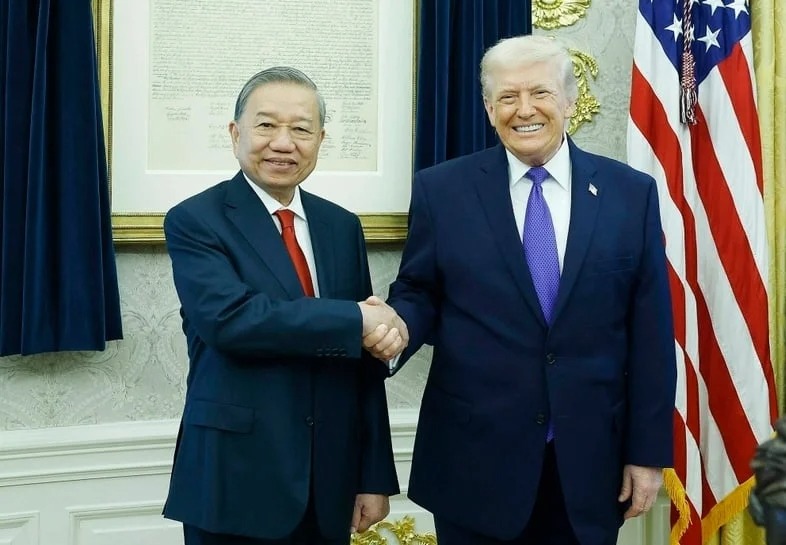
Vietnamese Party General Secretary and President To Lam is beginning a major overseas trip that includes the United States and Canada, with the first part of the visit focused on the United Nations General Assembly. The diplomatic trip became a major Hanoi story on Sunday, September 20, as Vietnam prepared for a busy schedule of international meetings.
To Lam is scheduled to attend the high-level general debate of the 81st session of the UN General Assembly and hold bilateral meetings with foreign leaders and international organizations. The visit gives Vietnam an opportunity to present its views on global issues and explain its approach to international cooperation.
Vietnam has described the trip as part of its effort to play a proactive, constructive and responsible role in international affairs. Officials say the country wants to contribute to discussions on global problems while protecting national interests and expanding practical cooperation with partners.
The United States part of the trip also comes as Vietnam and Washington deepen economic and political ties. Trade has expanded strongly over recent years, while companies are exploring cooperation in areas such as technology, energy, manufacturing and supply chains. Stable relations with the United States are important to Vietnam’s export-focused economy.
Meetings in New York are expected to cover both multilateral issues and bilateral relations. Vietnam’s leadership has emphasized the importance of maintaining stable ties with major powers while also strengthening relationships across Asia, Europe and North America. The approach is designed to keep the country’s international partnerships broad.
The trip will be followed by a state visit to Canada. That visit will provide another opportunity for Vietnam to develop economic and diplomatic links in North America. Canada is an important partner for trade, education and investment, while Vietnam is one of Canada’s significant relationships in Southeast Asia.
Vietnam’s foreign policy places strong emphasis on independence, self-reliance and diversification. Working with different major economies allows Hanoi to pursue national interests without relying too heavily on any single partner. This approach has become increasingly important as global trade and security relationships continue to change.
Economic diplomacy is also central to the visit. Vietnamese officials want to attract investment, technology and new trade opportunities. Meetings with foreign leaders and business representatives can help support those goals by creating opportunities for agreements and deeper links between companies.
To Lam’s trip therefore combines multilateral diplomacy with practical economic and political goals. His activities in the United States and later Canada will be watched for new areas of cooperation as Vietnam continues to strengthen its international role and present itself as an active partner in a changing global environment.
The United States visit also has a strong economic dimension. Vietnam is deeply connected to global supply chains, so stable relations with major economies are important for exports and investment. Meetings with US officials and business representatives can help address practical issues while also supporting longer-term cooperation in technology, energy and manufacturing.
At the United Nations, Vietnam can also raise issues that matter to developing and middle-income countries. Its message is expected to emphasize cooperation, respect for international law and peaceful solutions to disputes. The UN platform gives Hanoi a chance to present those positions to a broad international audience.
The Canada leg will extend the diplomatic effort beyond New York and Washington. Vietnam has been expanding its relationships with partners across different regions, and a state visit can create space for new agreements and business links. The full trip therefore combines global diplomacy with practical goals at the bilateral level.
The visit is also being watched for signs of practical agreements. High-level diplomatic trips can create political direction, but businesses and institutions often need follow-up work before agreements produce measurable results. Vietnam’s leadership will therefore have to turn meetings and discussions into concrete cooperation while continuing its broader policy of maintaining relationships with a wide range of international partners. The visit will remain closely watched in Hanoi and Washington.
