




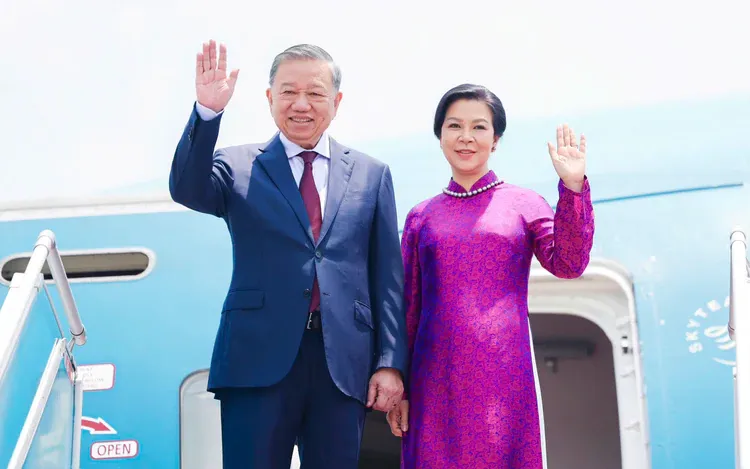
Vietnam’s top leader To Lam is preparing to travel to France following the Russia leg of his current overseas trip, with an official visit and attendance at the first ever International Space Summit in Paris scheduled from September 9 to 12. The visit, made at the invitation of French President Emmanuel Macron, extends what has already become one of the most significant diplomatic trips of the year for Vietnam’s leadership.
The International Space Summit itself represents a major diplomatic undertaking for France, bringing together nearly one hundred twenty foreign delegations at the invitation of President Macron and his special envoys, including astronaut Thomas Pesquet. The two day gathering will focus on four key priorities, including space security, the growing space economy, ensuring space remains a common good rather than a lawless zone, and space’s role in inspiring young people toward scientific research and exploration.
Secretary-General of the summit, General Philippe Adam, a former commander of the French Space Command, described To Lam’s planned attendance as a particularly significant signal of friendship and trust between Vietnam and France. Adam noted that the presence of a head of state at this level carries real weight given the geographical distance involved and the demanding nature of both leaders’ schedules, suggesting Vietnam’s participation reflects genuine priority placed on the relationship.
Outgoing French Ambassador to Vietnam Olivier Brochet, speaking ahead of the visit, said France particularly looks forward to hearing the voices of Vietnam and other Global South nations on questions of equitable access to and protection of legitimate interests in outer space. He framed Vietnam’s participation as demonstrating France’s broader commitment to pursuing equal cooperation with all countries, whether established space powers or developing nations with emerging interests in space access.
Brochet specifically highlighted the need for a new international legal framework governing space activities, noting that the existing framework dates back to the 1960s and no longer fully reflects today’s rapidly evolving satellite and space technology landscape. This push for modernized governance represents one of the summit’s core underlying themes, as space activity has expanded dramatically beyond what earlier international agreements anticipated.
Vietnamese scientific officials have pointed to the country’s existing space cooperation with France as a model for what deeper collaboration might achieve going forward. Professor Tran Hong Thai, President of the Vietnam Academy of Science and Technology, highlighted the VNREDSat-1 satellite, a key achievement of Vietnam-France scientific collaboration, as demonstrating three simultaneous benefits: access to real world technological systems, development of a lasting pool of specialized expertise, and creation of a genuine data ecosystem serving the country’s specific needs.
The France visit follows directly from To Lam’s historic state visit to Russia, which began September 7 and marked the first such trip by a Vietnamese Party and State leader to Russia since 1991. Together, these back to back visits to Russia and France within a single overseas trip illustrate Vietnam’s continued strategy of engaging major international partners across different geopolitical blocs simultaneously, rather than concentrating diplomatic energy on any single relationship.
Beyond the space summit itself, the French ambassador indicated the visit would help advance broader bilateral projects, including defense and security cooperation, with France standing ready to support Vietnam in developing its defense industrial and technological capabilities. As To Lam’s delegation prepares to arrive in Paris following the conclusion of the Russia leg of the trip, attention will turn to what concrete agreements or partnerships emerge from both the bilateral talks and the broader multilateral space summit discussions over the coming days.
