




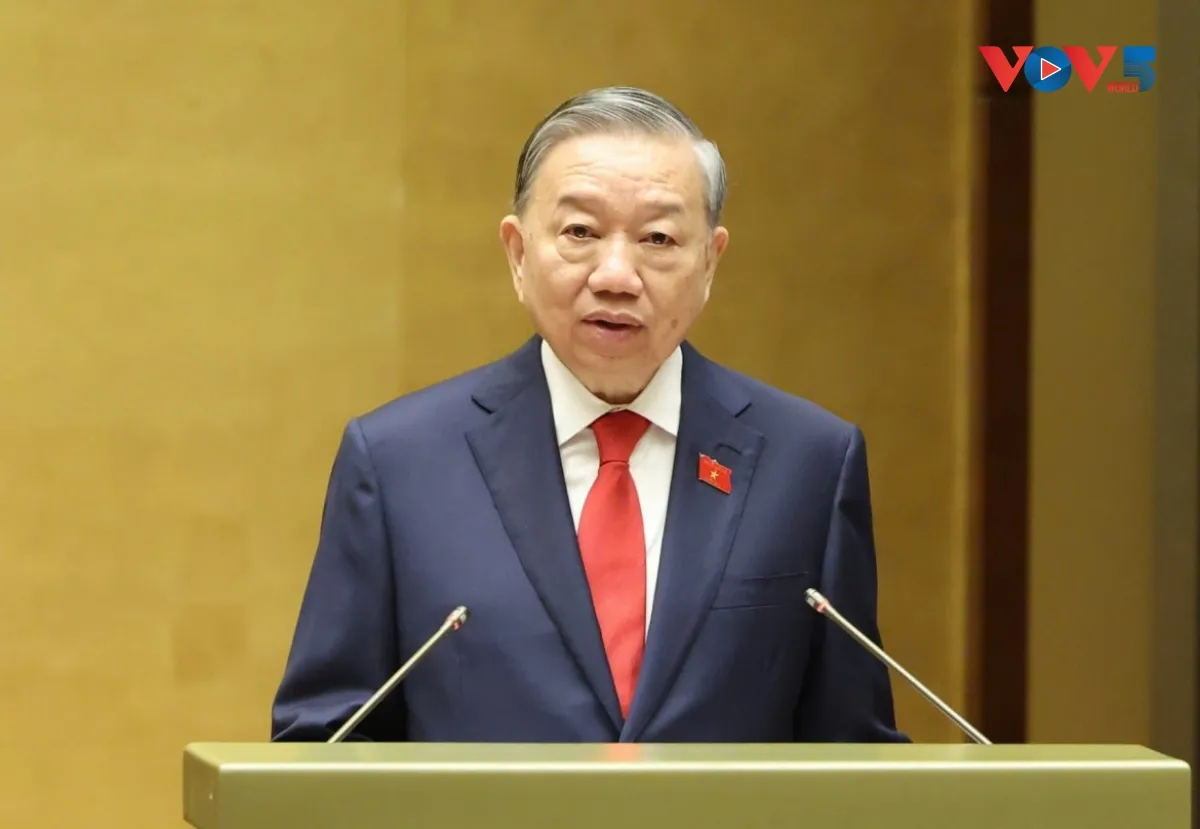
Vietnam’s ruling Politburo has adopted a major new resolution on regional development and national spatial planning, with Party General Secretary and President To Lam formally signing and promulgating the policy document this week. The resolution, numbered 27 in the Party’s official directive system, sets out a framework for restructuring how the country organizes development across its different regions and localities in the years ahead.
Nguyen Thanh Nghi, head of the Party Central Committee’s Commission for Policy and Strategy, presented the key contents of the resolution during a national conference held in Hanoi this week, part of a broader gathering convened to disseminate several newly adopted Politburo resolutions and directives to officials across the country. He explained that the resolution directs Vietnam to more effectively restructure, manage, and use regional development space in a manner aligned with national planning priorities.
Central to the new policy framework is an emphasis on leveraging what officials describe as the strongest advantages, competitive strengths, and cultural identity unique to each region and locality across the country. Rather than pursuing a uniform development approach nationwide, the resolution calls for tailoring strategies to the specific characteristics and comparative advantages that different parts of Vietnam already possess, aiming to maximize overall national development by playing to regional strengths.
The resolution sets ambitious long term goals extending well beyond simple economic growth metrics. Officials outlined objectives including ensuring ecological sustainability across the country’s development trajectory, building a national defense and security apparatus that is modern, self reliant, and robust, and guaranteeing that citizens have access to high quality social services regardless of which region they call home. These combined goals are framed as essential steps toward Vietnam’s stated ambition of becoming a developed, high income country while continuing to advance along its chosen socialist path.
To translate these broad objectives into actionable policy, the resolution lays out ten distinct groups of key tasks and solutions that government agencies and local authorities will need to pursue moving forward. Officials have not yet released granular details on implementation timelines for each of these task groups, though the framework is expected to guide planning decisions across ministries and provincial governments as they align their own development strategies with the new national approach.
The resolution formed just one part of a broader package of policy documents presented during this week’s national conference. Additional resolutions covered topics including the Politburo’s approach to ideological affairs in the current context, a directive promoting greater innovation and accountability among Party officials, a resolution addressing overseas Vietnamese affairs, and a separate resolution focused on developing tourism into what officials describe as a spearhead economic sector for the country going forward.
General Secretary To Lam addressed the broader conference, stressing that the genuine value of any Party resolution or directive should be measured by its practical ability to solve real problems and produce changes that ordinary citizens can actually see and feel in their daily lives. That framing places pressure on implementing agencies to demonstrate tangible results from this new regional development framework rather than treating it as purely aspirational policy language.
As provincial and local governments begin working through how to apply this new regional development framework to their own specific circumstances, attention will turn toward how quickly concrete implementation measures emerge from the ten task groups outlined in the resolution. For a country pursuing ambitious growth targets while managing significant regional disparities in development, this latest policy framework represents an attempt to create a more coordinated and locally attuned approach to national development planning over the coming years.
