




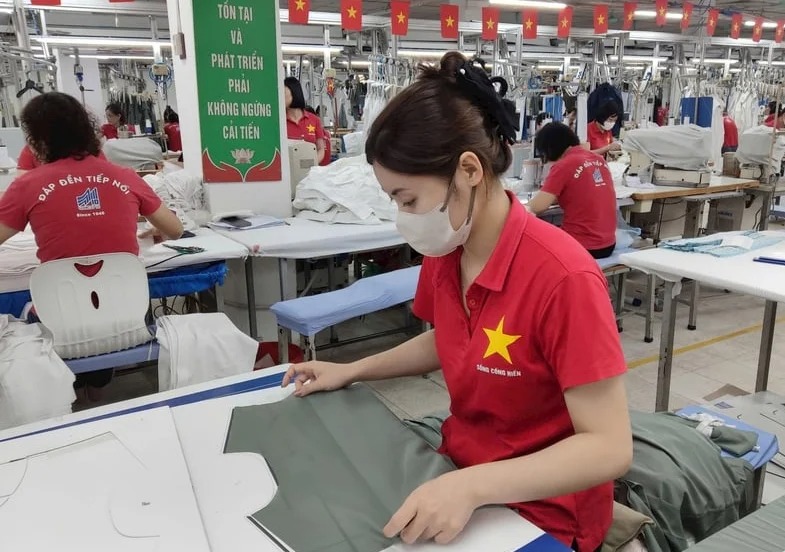
Vietnam’s textile and garment sector reached 49.3 billion dollars in exports during the first eight months of this year, up 7 percent from the same period last year, according to figures highlighting the industry’s continued importance to the country’s broader export economy. With this pace established, the sector now needs to generate approximately 24.9 billion dollars over the remaining four months of the year, averaging 6.23 billion dollars in monthly exports to hit its full year target.
That required monthly pace represents a meaningfully faster rate than what the industry has averaged through the first eight months, when total exports divided across those months worked out to roughly 6.16 billion dollars monthly. The modest acceleration needed for the remainder of the year reflects the industry’s typical seasonal pattern, where export volumes often climb during the final quarter as manufacturers fulfill orders tied to the crucial holiday shopping season in major Western markets.
Vietnam has established itself as one of the world’s leading textile and garment exporters over the past two decades, building a manufacturing base that serves major international clothing brands and retailers across North America, Europe, and beyond. The sector employs millions of workers directly and indirectly, making its export performance a closely watched indicator not just for trade statistics but for broader employment and household income trends across the country.
This year’s growth trajectory arrives amid a genuinely complex global trade environment, with elevated oil prices tied to the ongoing Middle East conflict adding cost pressure throughout international shipping and logistics networks. Despite these headwinds, Vietnamese textile manufacturers have continued securing sufficient order volumes to sustain positive year over year growth, suggesting the sector has maintained its competitive positioning within global supply chains even as broader economic conditions have grown more challenging.
Industry analysts note that Vietnam’s textile sector has benefited significantly from the broader trend of global supply chain diversification, as international brands and retailers have sought to reduce concentration risk by spreading manufacturing across multiple countries rather than relying heavily on any single production base. That diversification trend has generally worked in Vietnam’s favor, given the country’s established infrastructure, skilled workforce, and extensive network of existing trade agreements with major consuming markets.
The textile and garment sector’s performance also carries broader significance for Vietnam’s overall economic growth targets this year, given officials have set an ambitious goal of achieving double digit gross domestic product expansion. Manufacturing sectors like textiles and garments contribute meaningfully to that broader growth push, complementing strength in other export categories including electronics and machinery that have similarly posted solid gains through the first eight months of the year.
Vietnamese textile companies have continued investing in production capacity and technology upgrades throughout this year, positioning themselves to capture additional market share as global brands continue their search for reliable, cost competitive manufacturing partners. That ongoing investment reflects industry confidence that current growth trends can be sustained, even as companies acknowledge the accelerated pace needed to reach this year’s full export target during the remaining months.
As the sector moves into its traditionally busier final quarter, close attention will focus on whether manufacturers can indeed sustain or exceed the 6.23 billion dollar monthly pace required to meet this year’s export goal. With holiday season orders from major international retailers typically concentrating during this period, the coming months represent a genuinely important test of Vietnam’s textile industry’s capacity to deliver on its ambitious annual targets.
