




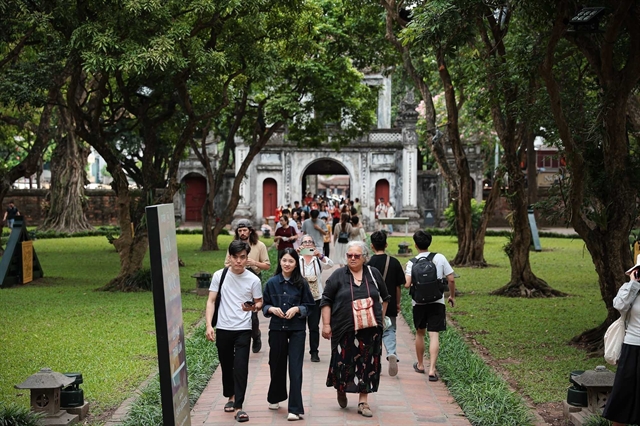
Vietnam’s tourism sector continued its strong recovery in 2026 as the country welcomed nearly 14 million international visitors during the first seven months of the year. The latest figures suggest the nation remains on track to achieve its goal of attracting 25 million foreign visitors by the end of the year.
According to data released by the National Statistics Office under the Ministry of Finance, Vietnam received 13.9 million international visitors between January and July. The total represents a 13.8 percent increase compared with the same period in 2025 and fulfills 56 percent of the country’s annual tourism target.
In July alone, Vietnam welcomed 1.67 million international visitors, marking a 6.6 percent increase from the same month last year. The growth came despite ongoing global economic uncertainty and a period that is traditionally considered a slower season for inbound tourism.
Air travel remained the primary gateway for international visitors. During the first seven months of the year, 11.5 million travelers arrived by air, accounting for 82.8 percent of all foreign arrivals. Air arrivals increased by 10.7 percent compared with the previous year.
Land border crossings recorded even stronger growth. More than 2.2 million visitors entered Vietnam through land routes, a rise of 33.6 percent year-on-year. Sea arrivals also increased, reaching 210,900 visitors, up 14.7 percent from the same period in 2025.
Tourism officials credited the positive results to several factors, including visa facilitation measures, expanded international flight networks, stronger tourism promotion efforts, and continued improvements in tourism services and experiences across the country.
With the peak international travel season expected to begin in late September and continue through the final months of the year, authorities believe Vietnam is well positioned to sustain its growth momentum and reach its annual target.
China remained Vietnam’s largest international tourism market during the January-to-July period. The country accounted for approximately 3.1 million visitors, representing 22.2 percent of all international arrivals.
South Korea ranked second with 2.4 million visitors, maintaining its long-standing position as one of Vietnam’s most important tourism markets.
Russia emerged as one of the most notable success stories. The country became Vietnam’s third-largest source market and the largest in Europe, with 864,000 visitors. Russian arrivals surged by 174 percent compared with the same period last year and exceeded pre-pandemic levels recorded in 2019.
Tourism authorities attributed the strong Russian growth to the return of direct flights, increased flight frequencies, and growing demand for Vietnam’s coastal holiday destinations.
Northeast Asia continued to dominate Vietnam’s tourism landscape. Alongside China and South Korea, Taiwan contributed 747,000 visitors, while Japan sent 498,000 travelers during the first seven months of the year.
Other Asian markets also posted strong results. Cambodia recorded 565,000 visitors, India contributed 553,000 arrivals, and the Philippines reached 417,000 visitors. These figures highlight the increasing importance of regional tourism and the growing role of South Asia in Vietnam’s visitor market.
Long-haul destinations also continued to provide valuable tourism growth. The United States sent 617,000 visitors, while Australia contributed 397,000 travelers during the reporting period.
Europe recorded the fastest regional growth among all international markets. Visitor arrivals from European countries increased by an average of 53.4 percent year-on-year.
Beyond Russia, several European countries posted impressive gains. Arrivals from Poland rose by 51.3 percent, while the Czech Republic increased by 28.6 percent. Sweden recorded growth of 24.7 percent, and Switzerland posted a 21.7 percent increase.
Tourism officials noted that these countries benefit from Vietnam’s visa exemption policies, demonstrating the effectiveness of easier entry procedures in attracting international visitors.
European travelers are also considered especially valuable to the tourism sector because they often stay longer and spend more during their visits than many other visitor groups.
Growth remained strong across Asia as well. The Philippines recorded the fastest increase at 63.6 percent, followed by India at 42.9 percent, Cambodia at 40.8 percent, Singapore at 31 percent, Indonesia at 27.3 percent, and Malaysia at 21.6 percent.
Officials linked the regional growth to stronger flight connections, geographic proximity, and rising demand for travel within Asia.
Several high-spending long-haul markets also delivered healthy gains. Visitor arrivals from the United States increased by 18.3 percent, Canada by 25.1 percent, Australia by 22.5 percent, and New Zealand by 22.4 percent.
With international arrivals continuing to rise across key markets and the busiest travel season still ahead, Vietnam’s tourism industry is expected to remain one of the country’s strongest economic growth drivers throughout the remainder of 2026.
