




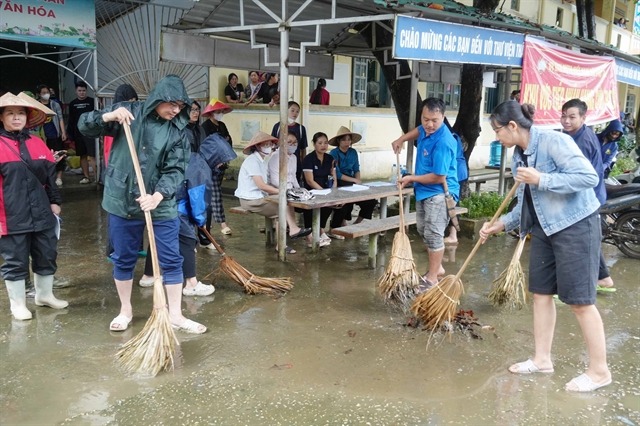
As Mường Than Commune in Vietnam’s northern Lai Châu Province continues to recover from a devastating flash flood, thousands of residents are receiving support not only from rescue teams but also from a large network of volunteers, local officials, teachers, and community members working behind the scenes.
The flood struck the commune on July 17, causing significant damage to homes, infrastructure, and farmland. While soldiers, police officers, and emergency responders have remained on the front lines of rescue and recovery operations, many others have quietly played a vital role in supporting affected families and helping the community begin the rebuilding process.
Since the disaster, the headquarters of the Mường Than Commune People’s Committee has become the main center for receiving and distributing relief supplies. Donations from individuals, organizations, and charitable groups across Lai Châu Province and other parts of Vietnam have arrived daily, filling the facility with rice, drinking water, blankets, instant food, and other essential items.
Volunteers have worked continuously to unload, organize, and distribute these supplies to people affected by the flood. Their efforts have helped ensure that aid reaches families in temporary shelters and communities that remain difficult to access.
More than 1,200 displaced residents have been staying in temporary shelters following the flood. Volunteers have helped provide food, water, and daily necessities while supporting the logistics needed to maintain relief operations.
Teachers have been among those leading local support efforts. Many educators have spent their days helping receive donations, sort supplies, and coordinate deliveries to evacuation centers and residential areas. Their work has helped keep relief efforts organized during a period of significant disruption.
Youth volunteers have also played a major role in the response. Local youth organizations have mobilized members whenever relief convoys arrive, assisting with unloading supplies, recording donations, and distributing essential goods to residents. Their involvement has increased the speed and efficiency of aid delivery throughout the commune.
Local authorities have emphasized the importance of transparency during the relief process. Officials responsible for inventory management have maintained detailed records of all donations, including both goods and financial contributions. Regular inventory checks are being conducted each day to ensure accountability and accurate tracking of assistance.
Support has extended far beyond the boundaries of Mường Than Commune. Residents from neighboring communities quickly joined the relief effort after learning of the scale of the disaster. Local leaders and volunteers in nearby communes organized food collections and prepared meals for displaced families sheltering in schools and community buildings.
Many volunteer groups have traveled directly to affected areas to provide assistance. Teams have delivered cooked meals to evacuees and rescue workers, helping support those involved in recovery operations. Community kitchens have become an important source of aid as residents work to rebuild their lives.
Volunteers have also assisted with cleaning schools, community halls, and temporary shelters. Efforts to improve sanitation and maintain safe living conditions have been especially important as large numbers of people remain displaced. These activities have helped create a safer environment for families waiting to return home.
At the same time, commune officials and village leaders have remained active across the affected region. They have been conducting damage assessments, monitoring areas vulnerable to landslides, warning residents about potential risks, and organizing evacuations where necessary. These actions have helped reduce further danger and protect lives during the recovery period.
Local authorities say the dedication shown by public servants, teachers, volunteers, and community members has become one of the strongest forces supporting recovery efforts. Their work has helped flood victims access essential services while providing emotional support during a difficult time.
The spirit of solidarity has continued to grow throughout the province. Residents from nearby communes have donated food, transportation services, and other resources to assist affected communities. Some local families have even provided their own vehicles to transport relief supplies and support aid operations.
According to preliminary figures, donors have contributed about 25 tons of rice, 1,700 cartons of instant noodles, and many other essential goods to support flood victims. Financial contributions have also increased steadily. By July 24, local relief authorities had received nearly $190,000 in cash donations from organizations, businesses, and individuals.
As recovery efforts continue, the response in Mường Than highlights the power of community support during times of crisis. While emergency responders remain essential to rescue and recovery operations, the contributions of volunteers, teachers, local officials, and ordinary residents have become equally important in helping families recover and rebuild after the disaster.
