




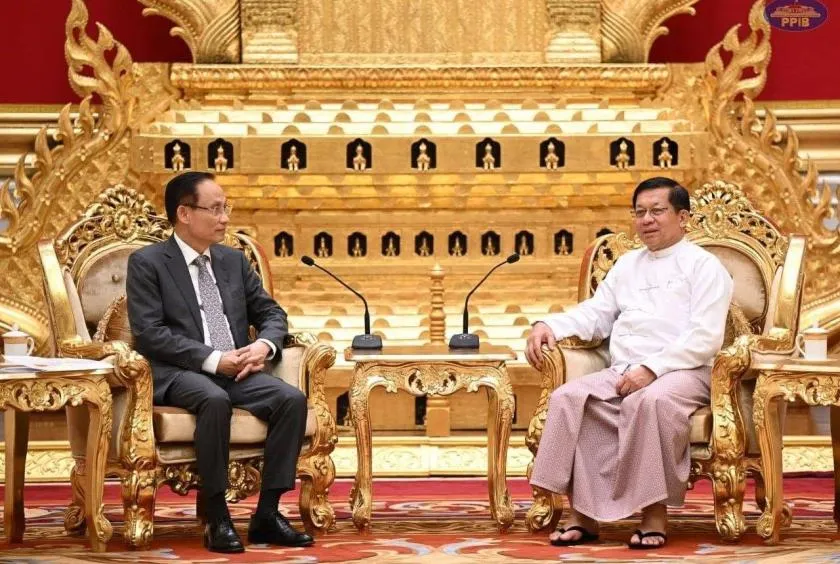
Myanmar’s president, Min Aung Hlaing, has arrived in Vietnam for an official visit running from September 4 through 6, marking a significant diplomatic engagement between the two Southeast Asian nations. The visit comes just days after Vietnam completed its own eighty first National Day celebrations, giving the trip added symbolic weight as Vietnamese leaders continue an active stretch of international diplomacy following the holiday period.
The Myanmar president is traveling with his spouse for the multi day visit, which is expected to include formal talks with senior Vietnamese leadership covering bilateral cooperation across political, economic, and security matters. Officials from both countries have indicated the visit will focus on strengthening ties between the two nations, building on Vietnam’s stated policy of maintaining constructive relationships with all of its regional neighbors within the Association of Southeast Asian Nations.
The timing of the visit places it alongside a broader flurry of diplomatic activity for Vietnam this week. National Assembly President Tran Thanh Man and his spouse are also set to lead a high ranking delegation on official visits to other countries in the region, reflecting Vietnam’s continued emphasis on expanding its diplomatic footprint across Asia even as domestic political attention remains focused on the aftermath of National Day celebrations.
Vietnam’s approach to regional diplomacy has emphasized building relationships across the full spectrum of ASEAN member states, regardless of differing political systems or international standing. That approach has allowed Vietnam to maintain working relationships with a wide range of neighbors while also expanding ties well beyond the immediate region, as seen in recent high level exchanges with countries ranging from India to Kyrgyzstan in recent weeks.
Bilateral relations between Vietnam and Myanmar have historically centered on trade, agricultural cooperation, and shared interest in regional stability within Southeast Asia. Officials from both governments are expected to discuss opportunities to deepen economic cooperation during the visit, potentially covering areas such as trade facilitation, investment, and coordination on regional infrastructure projects that could benefit both countries.
The visit also arrives during a period when Vietnam has received a wave of congratulatory messages from international partners marking its National Day anniversary. Leaders from India, South Korea, Indonesia, Singapore, Thailand, Malaysia, New Zealand, Australia, Canada, Brunei, and Myanmar itself, along with the United Nations, sent formal messages to Vietnamese leadership around the holiday, underscoring the breadth of Vietnam’s diplomatic relationships across the international community.
Myanmar has faced significant internal political challenges in recent years, and Vietnam’s willingness to host an official visit from its head of state reflects Hanoi’s broader diplomatic posture of engaging with regional governments through formal state visits rather than adopting a more selective approach based on internal political circumstances. Vietnamese officials have generally framed this approach as consistent with longstanding principles of non interference in the internal affairs of other nations.
As the three day visit continues, further details are expected to emerge regarding specific agreements or commitments reached between the two governments. For Vietnam, hosting high profile visits from regional leaders during this particularly active diplomatic period reinforces the country’s growing role as an active participant in Southeast Asian and broader international affairs, even as it simultaneously pursues ambitious domestic economic growth targets in the years ahead.
