




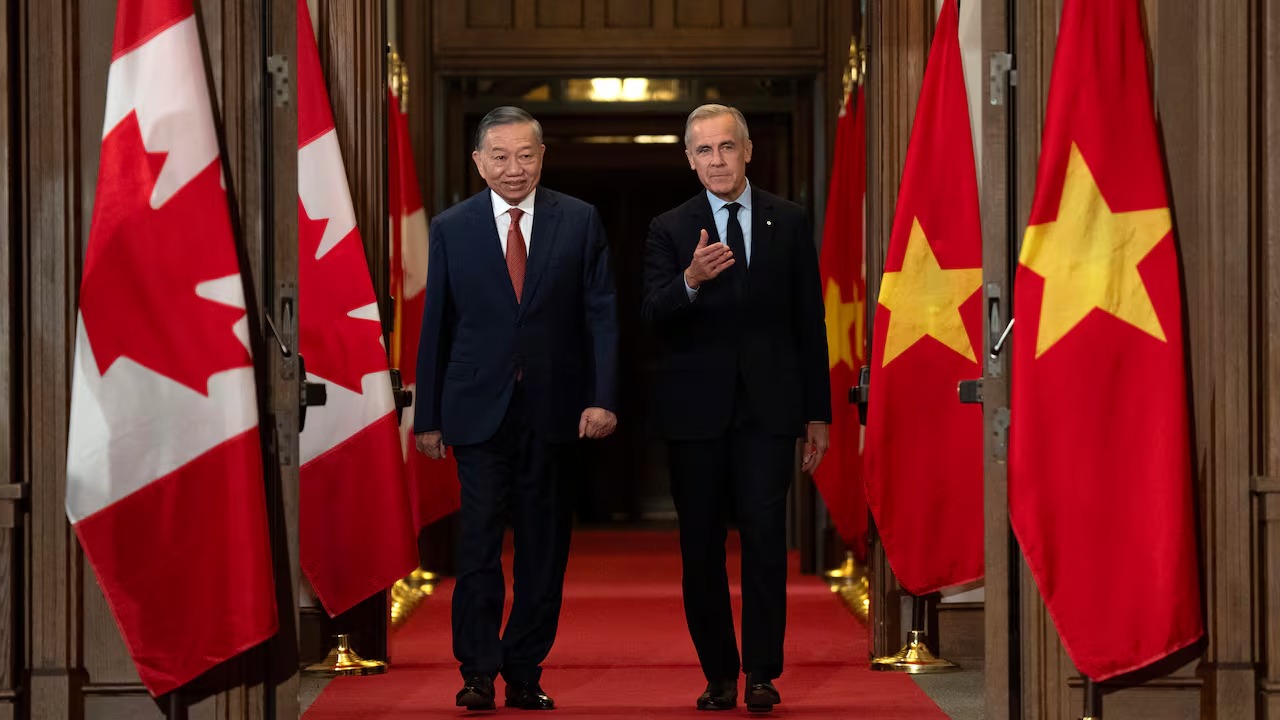
Vietnamese General Secretary and President To Lam held talks with Canadian Prime Minister Mark Carney in Ottawa on September 24, 2026, during his state visit to Canada. The meeting was reported in Vietnam on September 25 as the Vietnamese leader continued a major diplomatic trip.
The talks focused on Vietnam-Canada relations and ways to expand cooperation. To Lam’s visit is intended to strengthen political trust between the two countries and create new opportunities in areas such as trade, investment, education and technology.
Canada and Vietnam have developed closer economic links in recent years. Both countries are members of the Comprehensive and Progressive Agreement for Trans-Pacific Partnership, which provides a framework for trade and investment cooperation.
Trade is therefore an important part of the relationship. Vietnamese companies export a range of goods to Canada, while Canadian businesses have opportunities to invest in Vietnam’s growing economy.
Education is another area of cooperation. Vietnamese students have studied in Canada for many years, while Canadian educational institutions have developed partnerships with Vietnamese universities.
Technology and innovation are also becoming more important. Vietnam is seeking investment and skills that can support its economic development, while Canadian companies and institutions have expertise in several high-value sectors.
To Lam’s visit comes after his diplomatic activities in the United States during the 81st United Nations General Assembly. His schedule includes meetings with international leaders, businesses and organizations before the Canada visit.
The Canadian visit is therefore part of a wider period of international diplomacy for Vietnam. The Vietnamese leadership has been seeking stronger relationships with major economies while maintaining a broad network of international partnerships.
The two sides also discussed the future of their bilateral relationship. Vietnam wants cooperation with Canada to become more practical and effective, while Canada has economic and strategic interests in Southeast Asia.
Vietnam’s growing economy creates opportunities for Canadian businesses. Areas such as agriculture, food processing, technology, education and clean energy can provide possible areas for cooperation.
Agriculture is another relevant area because Vietnam is a major food producer and exporter. Canadian expertise in agriculture, food technology and research could support cooperation between businesses and institutions.
Energy and climate cooperation can also become more important. Vietnam is working to expand renewable energy while reducing the environmental impact of economic growth. Canada has experience in energy technology and environmental research.
The two governments may also work together through regional institutions. Both countries participate in multilateral organizations where they can discuss trade, security and development issues.
For Vietnam, stronger relations with Canada can help diversify economic partnerships. Maintaining relationships with several major markets can reduce dependence on any single market and create more opportunities for Vietnamese businesses.
For Canada, Vietnam provides access to a rapidly developing Southeast Asian economy. Canadian companies can use Vietnam as both a market and a production location for goods serving the wider region.
The state visit also has symbolic importance. Official visits allow leaders to meet directly and establish personal contacts that can support future agreements.
The next stage will involve turning political discussions into specific projects and business agreements. Government meetings can create a framework, but companies, universities and other organizations must develop practical cooperation.
Vietnam and Canada are expected to continue discussions on trade, investment, education, technology and other areas after the visit.
The September 24 talks in Ottawa therefore form part of a broader effort to deepen relations between the two countries. For Vietnam, the Canada visit follows an active period of diplomacy in North America and provides another opportunity to expand economic and political cooperation.
