




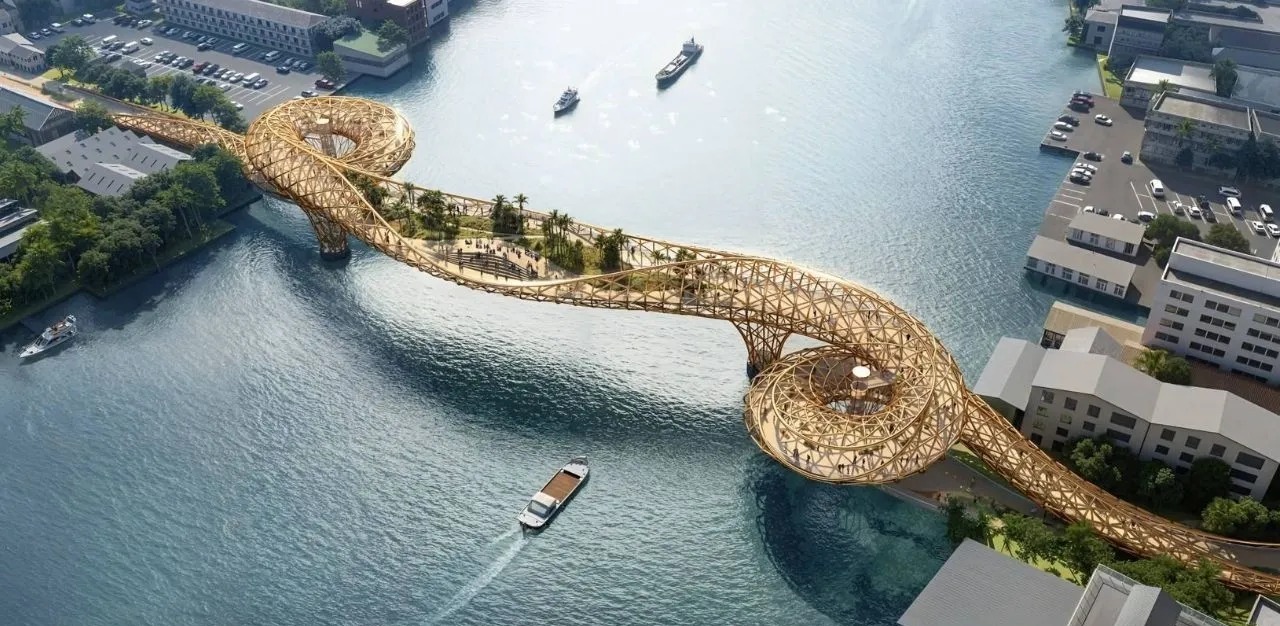
Bangkok authorities have announced plans for a major new pedestrian and cycling bridge across the Chao Phraya River, a project designed to improve sustainable transportation and strengthen connections between historic districts on both sides of the city.
The Bangkok Pedestrian Bridge Project is expected to cost approximately THB1 billion, or about US$29 million, and is targeted for completion by 2030. Officials say the bridge will provide a dedicated crossing for pedestrians and cyclists while supporting broader efforts to create a more connected and environmentally friendly urban transport network.
The initiative is being led by Bangkok Governor Chadchart Sittipunt and the Bangkok Metropolitan Administration. The project forms part of the city’s strategy to encourage green transportation and improve access to public spaces.
According to project plans, the bridge will span the Chao Phraya River and connect the historic districts of Songwat and Khlong San. The crossing will also link pedestrian routes to Bangkok’s MRT network, making it easier for residents and visitors to move between different forms of transportation.
Officials believe the bridge will become a new urban landmark while helping to create a stronger pedestrian ecosystem throughout the city.
Crossing the Chao Phraya River has long been a challenge for people traveling on foot or by bicycle. Most existing bridges are designed primarily for motor vehicles, while ferry services operate on limited schedules.
As a result, pedestrians and cyclists often have few convenient options when traveling between districts located on opposite sides of the river.
Governor Chadchart said the project reflects the city’s commitment to developing infrastructure that prioritizes people rather than vehicles alone.
He noted that Bangkok already has several bridges designed for cars and trucks, but there is a need for infrastructure that supports walking and cycling. The governor added that the project could help stimulate local economic activity and strengthen links between communities.
Officials also believe the bridge can contribute to reducing historical development gaps between the Phra Nakhon and Thonburi sides of Bangkok.
Project planners revealed that the bridge will measure approximately 300 meters in length and up to 10 meters in width. The design is intended to accommodate both pedestrians and cyclists comfortably while providing attractive public space along the river.
One notable feature of the proposal is that it does not require additional land expropriation. Authorities say this approach will minimize disruption to existing riverside neighborhoods and preserve community character.
The bridge design also includes plans to support local businesses. Rooftop areas on connected buildings may be adapted to host community shops, food vendors, and small commercial spaces.
Officials hope these additions will create economic opportunities for local entrepreneurs while enhancing the visitor experience.
Urban planning and architecture experts have welcomed the project’s broader vision. Pichai Wongwaisayawan, dean of the Faculty of Architecture at Bangkok University, described the bridge as an important example of social infrastructure.
He said the project should be viewed as more than a physical structure crossing the river. Instead, he argued that its greatest value lies in connecting people, cultures, communities, and transportation systems.
According to Pichai, successful cities require integrated public spaces that link trains, boats, walkways, and cycling routes into a seamless network.
He emphasized that Bangkok already has many recognizable landmarks. However, he believes the city would benefit more from stronger connections between existing public spaces and transportation services.
Urban development specialists say projects like the bridge can encourage walking, reduce reliance on private vehicles, and improve access to waterfront areas.
The proposal also aligns with global trends in sustainable urban design. Many major cities are investing in pedestrian-friendly infrastructure to improve mobility, reduce emissions, and create healthier public environments.
Supporters of the project believe the bridge could become a model for future developments along the Chao Phraya River. If connected to additional walkways and transit systems over time, it could form part of a larger network serving residents and visitors alike.
The Bangkok Pedestrian Bridge Project represents one of the city’s most ambitious efforts to expand non-motorized transportation infrastructure. As planning moves forward, officials hope the bridge will not only provide a safer river crossing but also help create a more connected, accessible, and sustainable Bangkok by the end of the decade.
