




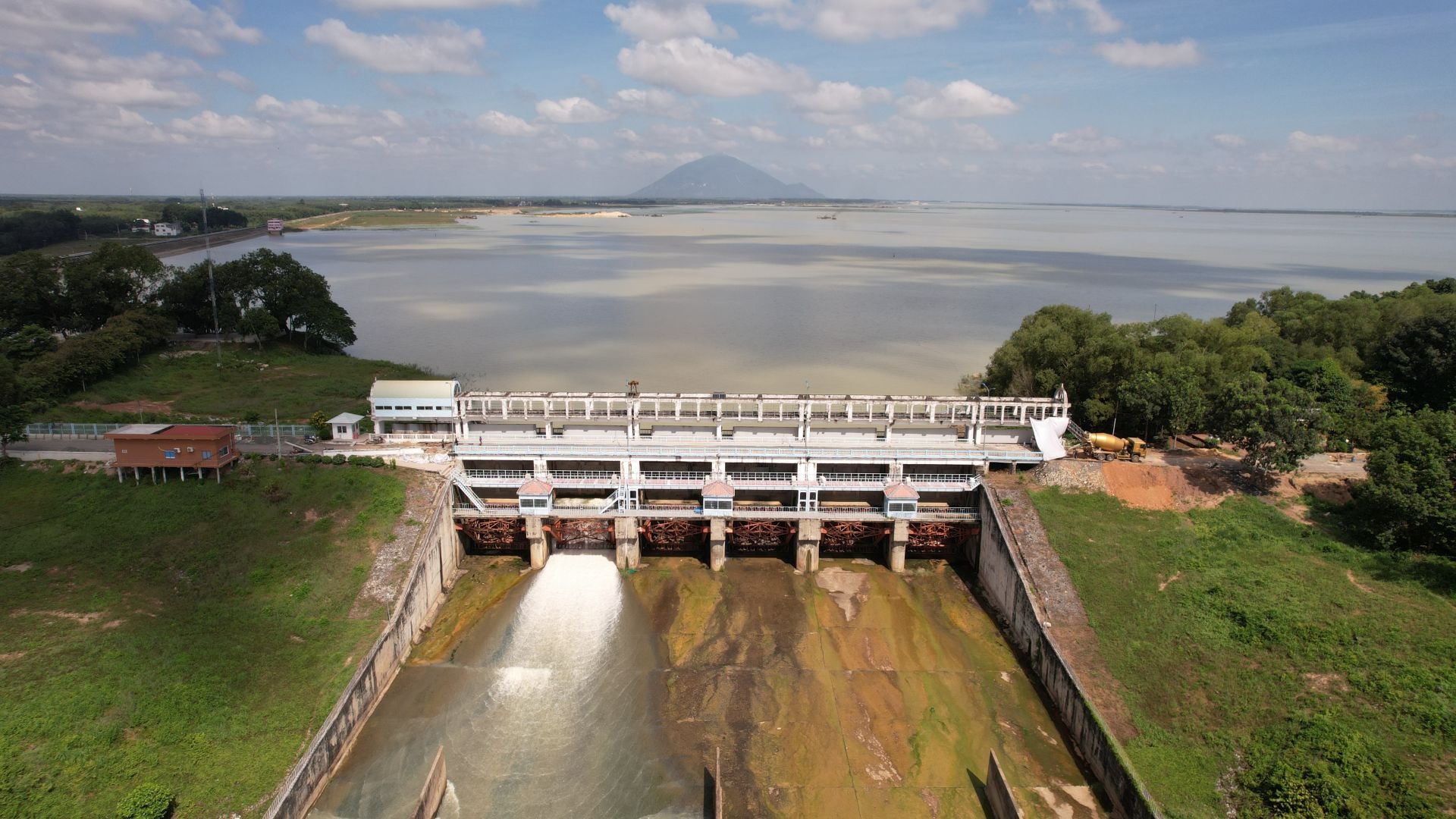
Dau Tieng Reservoir is gaining attention as a potential centre for Dau Tieng Reservoir tourism while continuing to provide vital water supplies to Tay Ninh Province and nearby areas.
The large reservoir has a wide water surface, natural landscapes and a rich ecosystem. These features could support eco-tourism, green farming, sustainable fishing and other nature-based activities.
At the same time, the reservoir remains a key part of regional water security.
Dau Tieng is the largest artificial irrigation reservoir in Southeast Asia. It covers about 270 square kilometres and can store up to 1.58 billion cubic metres of water.
The reservoir stretches across Tay Ninh, Ho Chi Minh City and Dong Nai. Its system includes the main dam, smaller dams, water gates and spillways.
It also has about 150 kilometres of canals and more than 300 irrigation facilities.
For many years, the reservoir has supplied water to farms across the region. It provides direct irrigation for nearly 117,000 hectares of farmland.
The reservoir also supplies water for other farming areas, homes and industrial production.
Its role extends beyond water supply. It helps reduce saltwater intrusion and supports farming along the Sai Gon River and the Vam Co Dong River.
About 28,800 hectares of farmland along the Sai Gon River and 32,317 hectares along the Vam Co Dong River benefit from its water system.
The reservoir also helps reduce flooding and improve water conditions downstream. It supports the wider environment by helping maintain water quality.
Dau Tieng also produces electricity. Water released through the system is used to generate power, with a total installed capacity of 20.5 megawatts.
Despite its important role in water management, the reservoir has another major asset. Its natural setting gives it strong tourism potential.
The wide lake is surrounded by forests, islands and peninsulas. The area has also become known for its clean air and quiet setting.
Visitors can enjoy boating, camping and fishing. The lake also offers attractive views during sunrise and sunset.
During the dry season, water levels fall in some areas. This can reveal grasslands that are partly covered during other times of the year.
Herds of cattle can then be seen grazing on these areas. The seasonal scene has become popular with photographers and people who enjoy outdoor activities.
Visitors have praised the area’s natural beauty and peaceful setting.
Đoàn Thị Như Hương, a visitor from Ho Chi Minh City, said she was impressed by the size of the reservoir, fresh air and natural landscape.
She said the area was well suited for camping, boating and sightseeing. She also believed it could attract more tourists if development is carried out with care for the environment.
Nguyễn Thành Danh from Dong Nai also praised the reservoir’s quiet setting and natural ecosystem.
He said future tourism development should protect the environment. Maintaining the area’s natural features will be important for future generations.
The reservoir could become part of a wider tourism network in Tay Ninh. A connection with Ba Den Mountain and nearby cultural and historical sites could give visitors more reasons to stay longer.
Such a network could help increase local tourism income while spreading visitors across several destinations.
However, development will need careful planning because the reservoir has an important role in water security.
Trần Quang Hùng, General Director of Southern Irrigation Exploitation One Member Co. Ltd., said the reservoir still has significant potential.
Possible areas include eco-tourism, aquaculture, semi-submerged forests and renewable energy. Floating solar power is also being considered as one possible use.
The management company plans to work with other agencies to improve information about protected areas around the reservoir.
It will review and digitise maps and add more boundary markers. These steps are intended to improve land management and protect important areas.
The company will also work with local authorities on land-use planning around the reservoir.
Officials want to balance infrastructure protection with the rights of residents who live in semi-submerged areas and protection corridors.
Tay Ninh authorities are also expected to strengthen safety checks around the reservoir. They will work to protect water corridors and control the use of natural resources.
Other priorities include preventing water pollution, protecting upstream forests and conserving biodiversity.
Water quality will also be monitored closely. Officials plan to increase public awareness of environmental protection.
The goal is to allow the reservoir to support tourism and green economic growth without weakening its role as a major source of water.
Dau Tieng Reservoir therefore has two important roles. It is a major water resource for agriculture, homes and industry, while its natural landscape offers opportunities for sustainable tourism.
Careful planning could allow both roles to grow together. For Tay Ninh, the challenge will be to use the reservoir’s tourism potential while protecting the water, land and ecosystems that make it valuable.
