




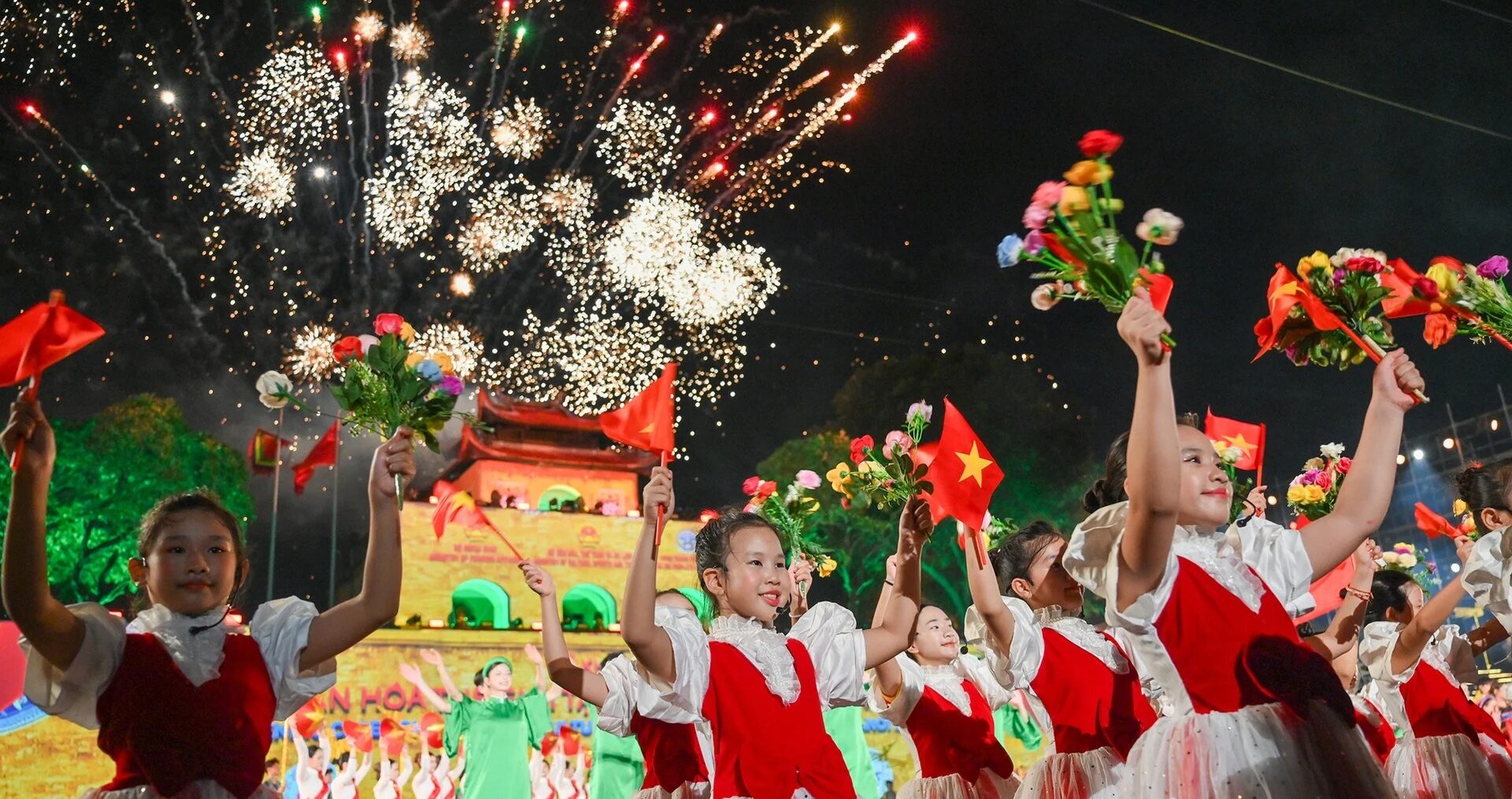
Hanoi is expanding cultural activities as the capital marks the first Vietnam Cultural Day with programmes highlighting the country’s traditions and ethnic diversity. The latest activities were launched on October 3 and continued into October 4, making culture a major part of the weekend programme in the capital. The events are designed to promote heritage while encouraging people to learn more about the traditions of Vietnam’s many communities.
The programme is built around the theme “Thang Long Hanoi, a thousand years of civilisation — a kaleidoscope of Vietnamese colours.” It was launched at the Vietnam National Village for Ethnic Culture and Tourism in the Hanoi area. The programme brings together cultural activities connected with different communities and aims to show how traditional practices remain part of modern Vietnamese life.
Officials have stressed that local communities should play a central role in preserving culture. Hanoi’s Ba Vi area is home to different groups, including Kinh, Muong and Dao communities. Their traditions include distinctive languages, clothing, folk music, dances and rituals. The programme gives these communities an opportunity to present their cultural practices to visitors while also encouraging younger generations to learn about their heritage.
The activities include traditional performances, cultural spaces, exhibitions and displays of products from craft villages. Traditional arts from groups including Ba Na, Gia Rai, Ede, Tay, Thai, Dao, Co Tu and Khmer communities are part of the programme. Visitors can also explore the cultural identity of Thang Long Hanoi and see products connected to local craft traditions.
The programme has a wider goal beyond entertainment. Cultural preservation is increasingly linked to tourism and local economic development in Vietnam. Traditional crafts, food, music and festivals can create opportunities for communities to earn income while maintaining cultural practices. Hanoi officials are therefore seeking ways to connect heritage preservation with sustainable tourism and improved local livelihoods.
The events also bring together Hanoi and other provinces and cities. Representatives from Hanoi and 10 other localities signed a cooperation agreement connected with activities at the Vietnam National Village for Ethnic Culture and Tourism. The aim is to create stronger links between different areas while providing opportunities for people from Vietnam’s 54 officially recognised ethnic groups to maintain and share their traditions.
Vietnam’s cultural diversity is one of the country’s important national characteristics. Different communities have developed their own customs and forms of artistic expression over many generations. Modernisation and changes in lifestyle can sometimes place pressure on traditional practices, particularly when younger people move away from rural communities. Cultural programmes can help keep those traditions visible and create opportunities for knowledge to pass from older generations to younger people.
Hanoi is also using cultural activities to strengthen its position as a major cultural centre. The capital has a long history and contains important heritage sites, including the Thang Long Imperial Citadel and the Old Quarter. Cultural programmes can connect these historic places with contemporary events and give residents and visitors new ways to experience the city.
The October 4 programme comes as several cultural events are taking place across Hanoi. The World Cultures Festival, which began on October 1, is also continuing through October 4 and brings cultural performances and activities involving Vietnam and around 50 countries. The festival is being held at the Thang Long Imperial Citadel under the theme “Converging Heritage — Shaping the Future.”
These events show the capital’s growing focus on cultural exchange. Hanoi is not only presenting Vietnamese traditions to international visitors but also giving residents opportunities to experience cultures from other countries. Such exchanges can support tourism and encourage greater understanding between communities.
The first Vietnam Cultural Day activities therefore have both a local and national purpose. They celebrate the country’s traditions while encouraging stronger efforts to protect cultural heritage. For Hanoi, the programme also supports the city’s wider goal of combining cultural preservation with tourism, community development and international exchange.
As the October 4 activities continue, visitors can expect performances, exhibitions, craft displays and cultural experiences involving different communities. The programme provides a public space where traditional practices can be shared and discussed. More importantly, it highlights the idea that culture is not only something preserved in museums but something that continues through people, families and communities.
