




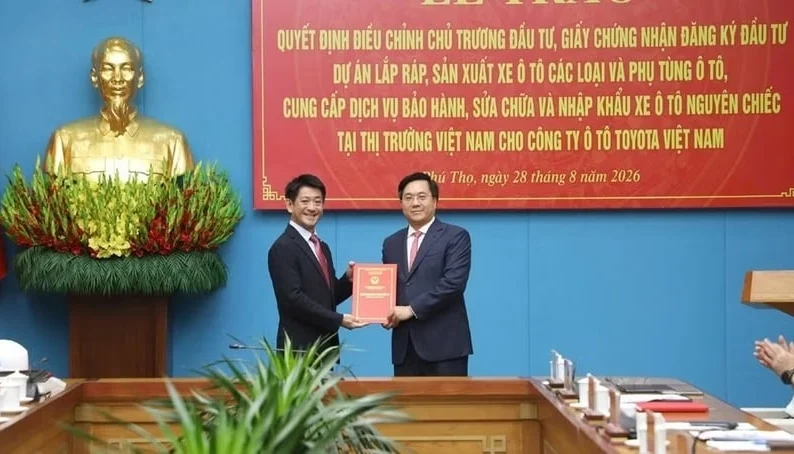
Toyota Motor Vietnam has received government approval for a major expansion project worth close to two hundred eighty three million dollars, a move that will boost the company’s production capacity and add electrified vehicle manufacturing to its lineup in the country. The investment marks one of the larger recent commitments by a foreign automaker in Vietnam, reflecting growing confidence in the country’s manufacturing sector even as global auto markets face mixed conditions.
The expansion project will allow Toyota to increase output at its existing Vietnamese facilities while introducing new production lines dedicated to electrified vehicles, a category that includes hybrid and other partially electric models. The move aligns with a broader global shift among major automakers toward electrified and lower emission vehicles, as environmental regulations tighten in many of the world’s largest car markets and consumer demand for greener options continues to grow.
Vietnam has increasingly positioned itself as an attractive destination for automotive manufacturing investment, offering competitive labor costs alongside improving infrastructure and a growing domestic consumer market. The country’s expanding middle class has fueled rising demand for personal vehicles, giving automakers like Toyota strong incentive to expand local production rather than relying solely on imported vehicles to serve Vietnamese buyers.
The approval comes during a week when Vietnam marked its National Day holiday, a period that traditionally sees significant government and business activity paused for celebrations. Despite the holiday timing, officials moved forward with approving the investment, signaling the priority placed on attracting and retaining major foreign manufacturing projects even during periods of reduced administrative activity.
Toyota has maintained a long standing presence in Vietnam, having operated in the country for many years as one of the most recognized automotive brands among Vietnamese consumers. The expansion builds on that established foundation, allowing the company to serve growing local demand while potentially positioning Vietnam as an export base for electrified vehicles destined for other markets in the region.
The investment fits within a broader pattern of foreign manufacturers deepening their commitment to Vietnam as part of global supply chain diversification efforts. Many international companies have shifted production toward Vietnam in recent years, drawn by the country’s trade agreements, relatively stable political environment, and growing pool of skilled manufacturing workers. Electronics, textiles, and now increasingly automotive production have all benefited from this broader investment trend.
Government officials have welcomed the Toyota expansion as evidence that Vietnam’s manufacturing sector continues attracting significant foreign capital despite global economic uncertainty. Officials have set ambitious targets for economic growth in the coming years, and continued investment from major international companies plays a central role in efforts to shift the country’s economy toward higher value manufacturing and away from reliance on lower cost, lower value production.
Industry analysts note that Toyota’s decision to invest specifically in electrified vehicle production reflects broader trends across the Vietnamese auto market, where demand for hybrid and other electrified options has grown steadily even as fully electric vehicle adoption remains at an earlier stage compared to some other markets in the region. This gradual approach allows automakers to introduce electrified technology to local consumers without requiring the extensive charging infrastructure needed for fully electric vehicles.
As the expansion project moves forward, attention will turn to how quickly Toyota can bring the new production capacity online and how strongly local demand responds to expanded electrified vehicle offerings. For Vietnam, the investment represents another step in its ongoing effort to build a more diversified and higher value manufacturing base, supporting broader economic goals as the country continues pursuing rapid growth in the years ahead.
