




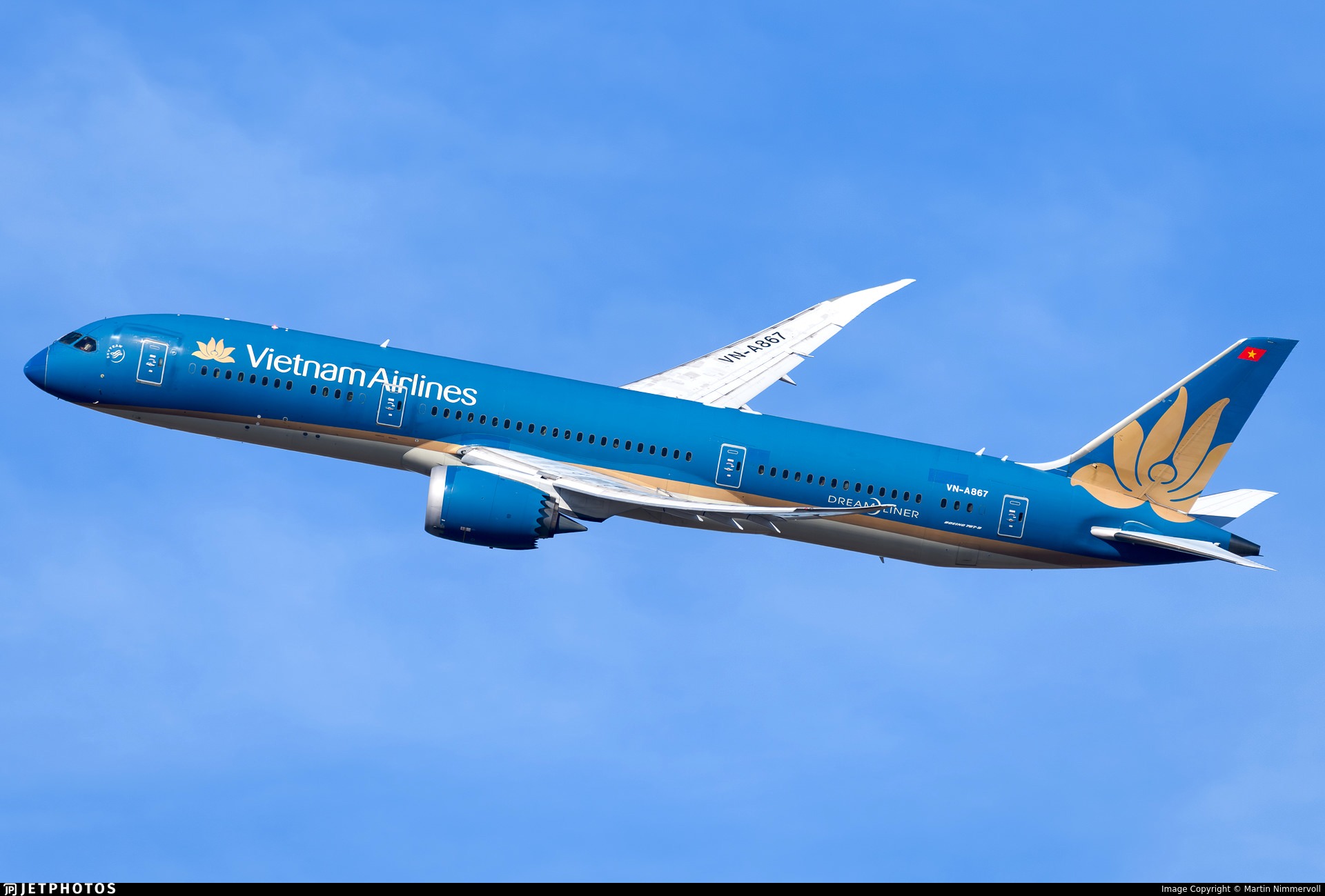
German aviation investigators have launched a formal inquiry after a Vietnam Airlines Boeing 787-9 was involved in a runway overrun and tail strike during departure from Munich Airport.
The incident happened on August 15 during Flight VN34 from Munich to Hanoi. The aircraft, registered as VN-A867, was carrying out its takeoff when it continued beyond the end of the paved runway before becoming airborne. During the rotation phase, the aircraft’s tail struck the ground.
The flight crew was able to keep control of the aircraft. The jet climbed safely after departure and remained airborne while crews assessed the situation. No injuries were reported.
Data from the flight showed that the aircraft departed Munich at 11:57 UTC, which was 13:57 local time. Investigators said the aircraft rotated later than expected during takeoff. Evidence found near the runway also supports the finding that the aircraft traveled beyond the paved surface before lifting off.
Officials found tire marks at the end of the runway that are believed to be linked to the aircraft. Several runway lights located beyond the paved area were damaged during the event. The aircraft also suffered damage to some of its tires.
After leaving the airport area, the aircraft climbed to about 9,000 feet. Air traffic control then directed the flight to an area south of Munich Airport. During this period, the crew carried out a fuel jettison procedure. This reduced the aircraft’s landing weight and helped prepare for a safe return to the airport.
The aircraft remained in the air for around two hours. During that time, it performed two low passes over the airport. These passes allowed controllers and airport personnel to visually inspect the aircraft, with special attention given to the landing gear. The inspection helped confirm that the aircraft could attempt a safe landing.
Following the checks, the Boeing 787 returned to Munich Airport. It landed safely on Runway 26R at 13:57 UTC, or 15:57 local time. Emergency procedures were in place as a precaution. The landing was completed without further incident.
The German Federal Bureau of Aircraft Accident Investigation is leading the investigation. The agency confirmed that the aircraft suffered significant damage. Damage was reported to the rear fuselage area where the tail contacted the ground. Investigators also found damage to wheels and tires on the main landing gear.
As part of the investigation process, both digital flight data recorders have been recovered from the aircraft. These devices store important flight information and cockpit data. Officials said the recorders will be examined at the agency’s facility in Braunschweig.
Investigators will review flight data, aircraft performance information, runway conditions, and operational procedures. The goal is to determine why the aircraft rotated late and why it continued beyond the end of the runway before becoming airborne.
The investigation is being carried out under international aviation rules. Germany is leading the inquiry because the event took place on German territory. Vietnam is participating as the country responsible for the airline. The United States is also involved because the aircraft and its engines were manufactured there.
Authorities emphasized that the investigation is still in its early stages. No conclusions have yet been reached regarding the cause of the accident. A preliminary report is expected to be released in about one month. The final report, which will include findings and any safety recommendations, is expected to take around one year to complete.
The outcome of the investigation will help aviation authorities and airlines better understand the factors behind the Vietnam Airlines Runway Overrun event and support future flight safety improvements.
