




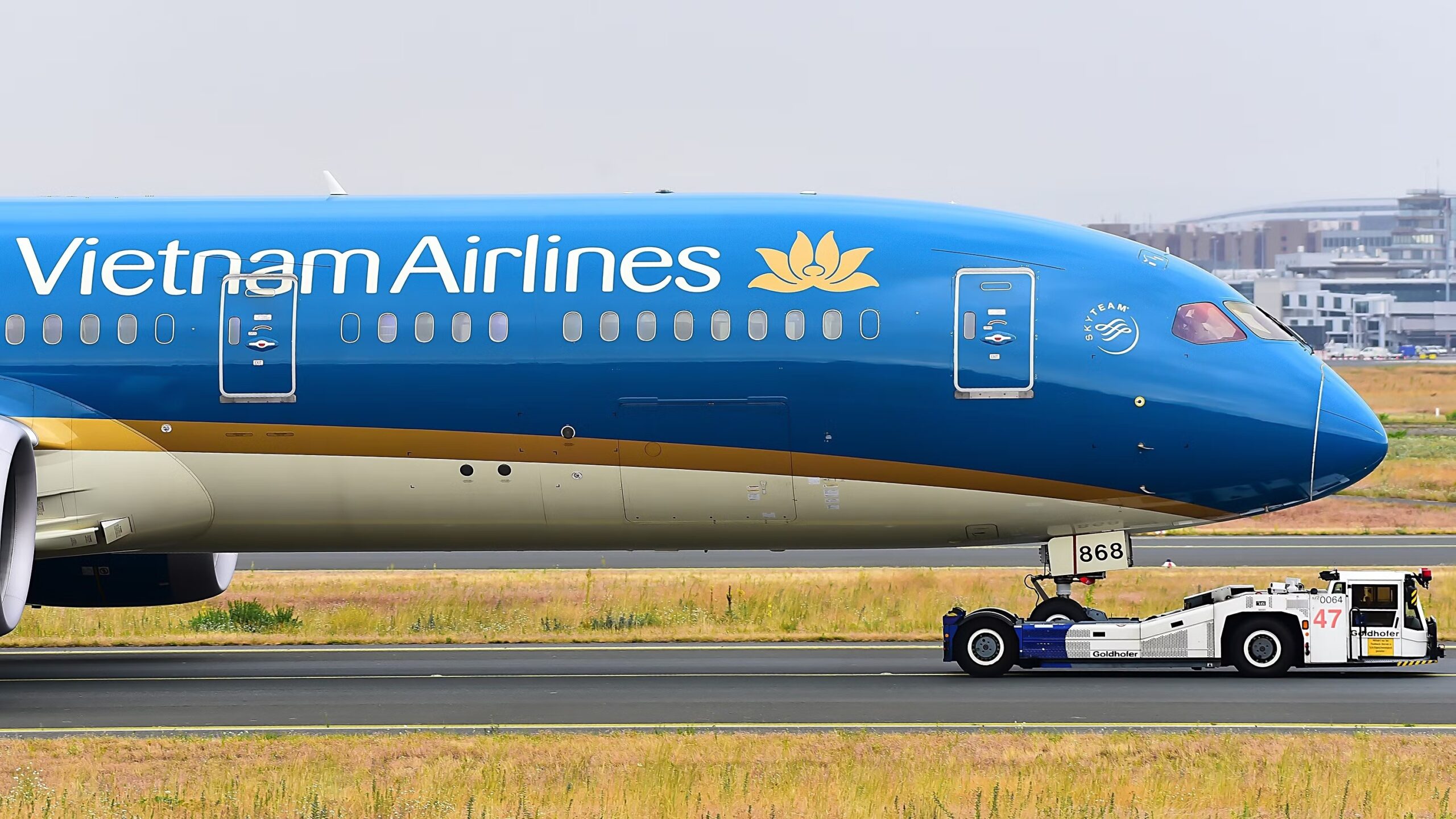
A Vietnam Airlines Boeing 787-9 was badly damaged after a late takeoff from Munich Airport on Saturday, August 15.
Flight VN34 was flying from Munich to Noi Bai International Airport in Hanoi. The aircraft was Boeing 787-9, registered as VN-A867.
The plane was leaving Munich when its tail hit the runway. Early reports also say the aircraft went beyond the end of the runway during the takeoff.
The incident caused major damage to the lower rear part of the aircraft. It also damaged runway lights.
The aircraft was able to climb after the tail strike. The crew then found a tire pressure problem during checks. They decided to return to Munich as a safety step.
The Boeing 787 climbed to about 10,000 feet before the return flight began. The crew also had to dump fuel before landing. This helped reduce the aircraft’s weight for a safer return to the airport.
About 90 minutes after takeoff, the aircraft came back to Munich. The crew made low approaches before landing on Runway 26R.
The aircraft then landed with smoke coming from the left main landing gear. The runway was later closed after the landing.
Early information suggests that the aircraft rotated very late during takeoff. The tail then struck the ground as the aircraft left the runway area.
Videos and images from the incident show dust and debris rising behind the aircraft during the takeoff. The marks on the rear fuselage also point to a strong ground strike.
The damage appears serious. The lower fuselage has a clear hole near the tail strike area. Parts of the aircraft skin were torn, while long scrape marks can be seen along the rear section.
The tail strike also affected the aircraft’s tail protection area. The damage will need a full inspection before the aircraft can return to service.
Aviation sources have suggested that the Boeing 787 may remain out of service for several months. The final repair time will depend on the full inspection and the extent of the structural damage.
There were no reports of serious injuries linked to the incident in the information available so far.
The aircraft was operating from Munich’s Runway 26L when the event happened. The early report that it went beyond the runway end is still subject to investigation.
A tail strike can happen when the rear part of an aircraft touches the runway during takeoff or landing. It can cause damage to the fuselage and other parts of the aircraft.
Pilots use several checks to avoid such events. Takeoff speed, aircraft weight, runway length and rotation technique all matter.
The incident will now be reviewed to establish why the Boeing 787 rotated so late. Investigators will also examine the runway, aircraft systems, weather and crew actions.
For Vietnam Airlines, the event means the Boeing 787 will need detailed checks before it can fly again. The airline may also need to adjust its flight plans while the aircraft remains out of service.
The safe return of VN34 allowed the crew to avoid a more serious outcome after the initial strike. The aircraft’s condition, however, shows the force of the contact with the runway.
More details are expected as investigators inspect the aircraft and review flight data. The final cause of the incident has not yet been confirmed.
