




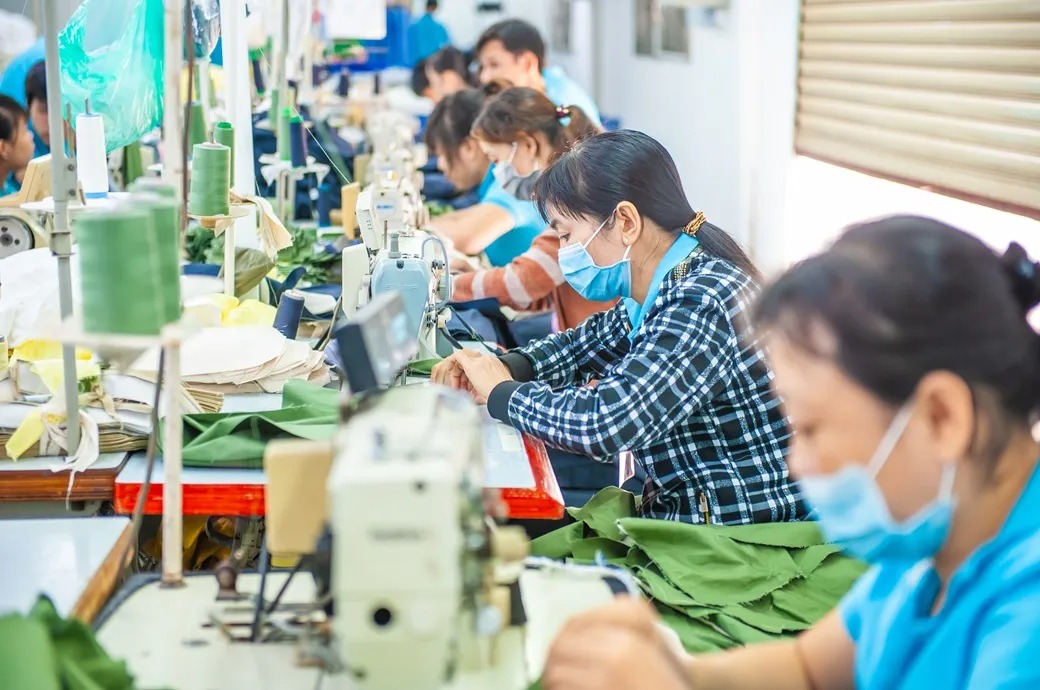
Vietnam’s apparel sector is winning more orders. But a labour shortage may make it hard to keep up.
The country’s textile and garment exports reached an estimated $4.672 billion in July 2026. That was up 8.2% from June. It was also 4.3% higher than July 2025.
For the first seven months of 2026, exports reached about $27.02 billion. That was a 2.67% rise from the same period last year.
Apparel was a key part of this growth. Clothing exports were estimated at $3.738 billion in July. The figure rose 8.9% from June. It was also 2.1% higher than a year earlier.
These numbers show strong demand for Vietnamese clothing. Yet factories now face a major test. They need enough workers to make the goods.
The Vietnam apparel labour shortage is becoming a growing concern for the industry. Recent reports say garment and seafood firms are facing worker gaps. This is happening even as wages rise.
The wider job market is also changing. Vietnam sends many workers abroad each year. Reports citing government data say about 130,000 to 150,000 Vietnamese workers take overseas jobs each year.
Many workers leave for better pay and better job options. By the end of last year, the overseas labour market had nearly 900,000 Vietnamese workers.
In May alone, 1,948 Vietnamese workers reportedly left for jobs abroad. Their destinations included China, Japan, South Korea, Singapore and parts of Europe.
This trend can put more pressure on local factories.
Garment makers are also facing strong competition at home. Electronics and machinery firms need large numbers of workers. These firms can compete for the same people that textile factories need.
That makes hiring harder for garment companies. It can also make it harder to keep skilled workers.
The Vietnam Textile and Apparel Association has warned that the competition for workers is becoming more intense. Industry officials raised the issue at a conference in July.
Some factories may not have enough staff to complete orders on time. Others may find it hard to accept new orders. This could become a serious issue if the worker gap grows.
The timing matters for Vietnam’s apparel industry. The country has spent years building its role as a major clothing supplier.
Vietnam has attracted global buyers through large export capacity. It has also built a wide supplier base and improved factory output. Trade links have helped the sector reach more markets.
But higher demand can create a new problem when factories cannot find enough people.
For global clothing brands, delivery time is critical. A factory may have the machines and the orders. But it still needs workers to run the lines, check goods and prepare shipments.
A long labour shortage could raise costs. It could also put pressure on delivery dates. In time, buyers may look at other production markets if factories cannot meet their needs.
Vietnam’s challenge is not a lack of orders. The bigger issue may be the number of workers available to fill those orders.
The country can respond in several ways. Better pay may help attract workers. Training can help factories build a larger skilled workforce. More automation may also reduce pressure on workers in some production tasks.
Still, these steps may take time.
For now, Vietnam’s export figures remain positive. July showed solid growth in both total textile and garment exports and clothing shipments.
But the Vietnam apparel labour shortage could test that growth in the months ahead. If factories cannot close the worker gap, a strong order book may not be enough to keep the industry moving at full speed.
