




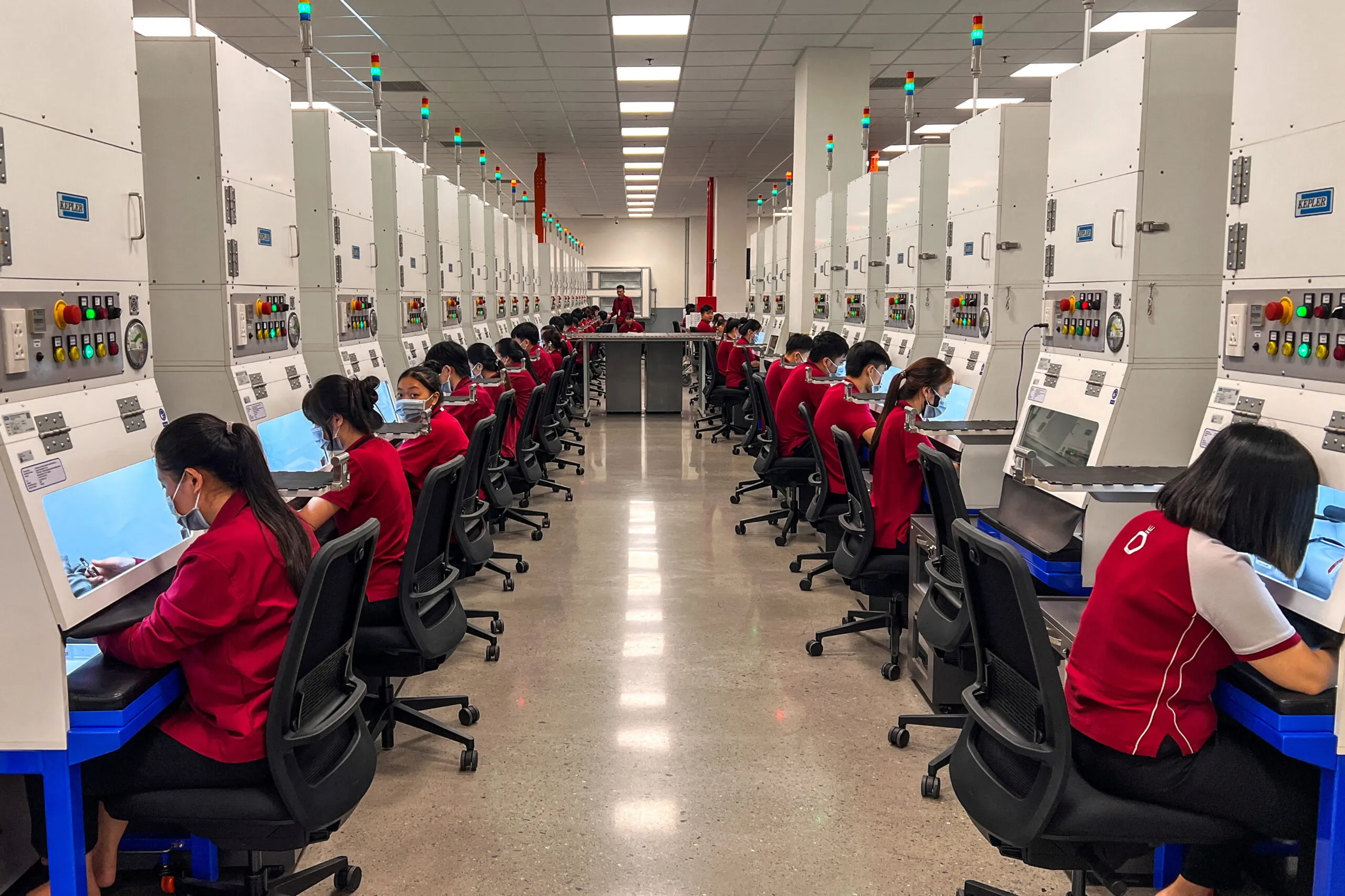
Vietnam is placing greater emphasis on science, technology, engineering and mathematics education as it seeks to develop a stronger workforce for advanced industries. The government sees skilled workers as essential to its ambitions in semiconductors, artificial intelligence, big data and renewable energy. As international competition in these sectors increases, the country faces pressure not only to educate more students but also to ensure that graduates have the knowledge and practical skills required to develop and operate modern technologies.
Education and Training Minister Hoang Minh Son has said that national policy places science and technology development at the centre of Vietnam’s long-term economic strategy. Government resolutions on technological development and education reform identify universities as important institutions for building the country’s scientific and technical workforce. The government has also introduced a programme to train people for high-tech industries, with a focus on research and development in strategic areas. These efforts are intended to strengthen domestic expertise and make Vietnam more attractive to international technology investors.
The scale of existing STEM education provides a foundation for further expansion. Nationwide, around 848,286 learners were enrolled in eight STEM disciplines, representing approximately 30.3 per cent of all learners. However, officials and experts say that increasing enrolment alone will not solve the country’s skills shortage. Some universities face limitations involving laboratories, teaching staff, research facilities and learning environments. There are also concerns that certain courses do not match the needs of employers or the requirements of rapidly changing industries.
Investment in advanced training facilities is one area receiving attention. Four member universities of Vietnam National University-Ho Chi Minh City have proposed spending around VND535 billion, or approximately US$20.6 million, on laboratories for STEM talent development. Such facilities can support practical learning and research, but they also require significant operating budgets and qualified academic staff. Experts argue that universities need stronger links with technology companies so that students can work on relevant problems and gain experience that prepares them for employment.
Vietnam has set ambitious targets for the years ahead. By 2030, it aims for STEM students to account for 35 per cent of enrolment at each education level, while around 20,000 learners are expected to participate in STEM talent programmes and 6,000 doctoral candidates are expected to pursue STEM disciplines. Officials say universities, research institutes, technology businesses and international scientists should all contribute to this effort. The challenge will be to improve education quality while expanding access, ensuring that Vietnam develops not only a larger technical workforce but also the research capacity needed to compete in advanced industries.
