




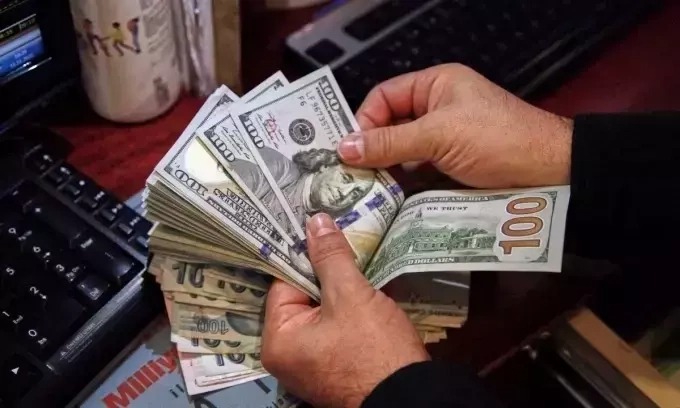
The U.S. dollar strengthened against the Vietnamese dong on Friday morning, continuing a broader trend of gains against several major global currencies as investors responded to international economic and geopolitical developments.
The Dollar Dong Exchange Rate moved higher at major Vietnamese financial institutions, reflecting increased demand for the U.S. currency and its stronger performance in global markets.
At Vietcombank, the dollar was sold at VND26,430, representing a 0.04% increase compared with the previous trading session. The modest rise extended the currency’s recent gains against the dong.
Meanwhile, trading on the unofficial market showed a different trend. The dollar slipped 0.04% to VND26,100, indicating slightly weaker demand in informal transactions despite the currency’s broader strength.
The State Bank of Vietnam also adjusted its official reference rate. The central bank raised the benchmark exchange rate by 0.12% to VND25,463, reflecting movements in international currency markets and domestic financial conditions.
Currency analysts noted that exchange rate changes in Vietnam often follow broader global trends, particularly movements involving the U.S. dollar. As the world’s dominant reserve currency, the dollar is highly sensitive to economic data, monetary policy expectations, and geopolitical developments.
Globally, the dollar advanced against several major currencies during Friday trading.
Market sentiment was influenced by renewed uncertainty surrounding efforts to secure a peace agreement involving Iran. Investors often move toward traditionally safer assets during periods of geopolitical uncertainty, and the U.S. dollar remains one of the most widely used safe-haven currencies.
The greenback also received support from higher U.S. Treasury yields. Rising bond yields can make dollar-denominated assets more attractive to investors, increasing demand for the currency.
Additional attention focused on expectations for future U.S. monetary policy. Reports suggesting the possibility of a Federal Reserve interest rate increase in September contributed to the dollar’s gains.
Market participants continue to monitor economic data closely as policymakers assess inflation, employment, and broader economic conditions before making future rate decisions.
Against the Japanese yen, the dollar strengthened to 158.505 yen during Asian trading hours. The move followed gains recorded in the previous session and placed the currency on track for a weekly increase.
The dollar had previously faced pressure after coordinated intervention efforts by Japanese and U.S. authorities aimed at stabilizing currency markets. However, recent trading has seen the U.S. currency recover some of those losses.
The euro also weakened against the dollar. The European currency traded at approximately $1.1521, extending a decline from the previous day.
The British pound experienced a similar trend. Sterling slipped slightly as the dollar strengthened, with the pound trading near $1.3449.
Commodity-linked currencies also faced modest pressure. The Australian dollar edged lower to around $0.7029, while the New Zealand dollar declined to approximately $0.5866.
Financial analysts said the dollar’s performance reflects a combination of economic and geopolitical factors. Expectations for interest rate decisions remain one of the most important drivers of currency movements globally.
When investors believe interest rates may rise, demand for the affected currency often increases because higher rates can provide stronger returns on investments denominated in that currency.
In Vietnam, businesses and investors continue to monitor exchange rate developments due to their impact on trade, imports, exports, and investment flows.
A stronger dollar can increase costs for importers purchasing goods priced in U.S. currency. At the same time, exporters may benefit when revenues earned in dollars are converted into local currency.
Currency movements also influence tourism, international transactions, and financial markets. As a result, changes in the Dollar Dong Exchange Rate are closely watched by companies, investors, and policymakers.
Economists expect exchange rates to remain sensitive to upcoming economic data releases and signals from central banks. Future decisions by the Federal Reserve and other monetary authorities could influence the direction of currency markets in the weeks ahead.
For now, the Dollar Dong Exchange Rate continues to reflect the broader strength of the U.S. currency as investors balance economic expectations, interest rate outlooks, and global market uncertainty.
