




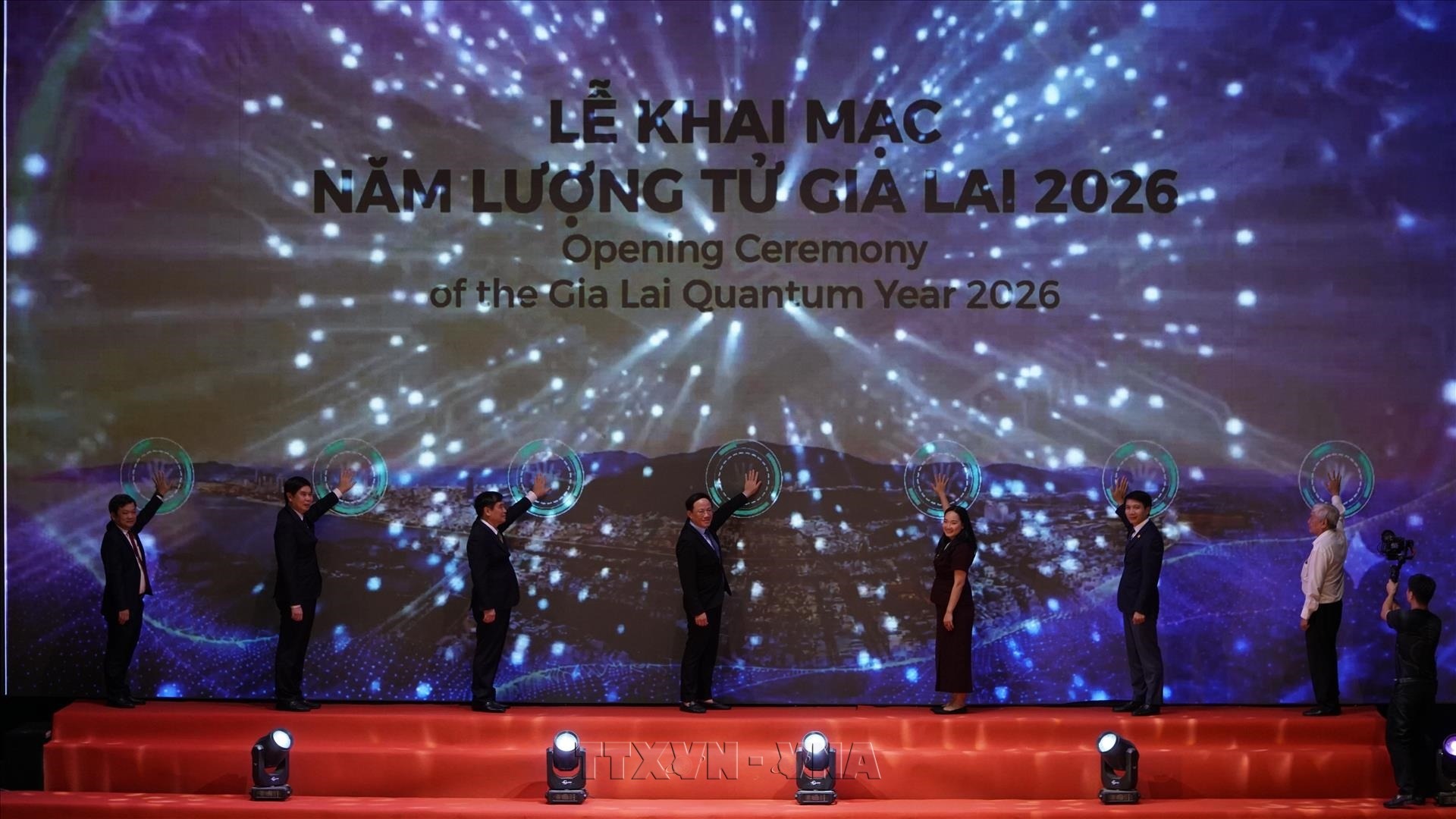
Vietnam’s central province of Gia Lai has officially launched the Year of Quantum 2026, a major initiative aimed at promoting quantum technology, innovation, and scientific research. The program, launched on Tuesday under the theme “Sign of the Times,” is designed to help the province prepare for future technological developments and strengthen its role in the country’s growing science and technology sector.
The opening ceremony attracted around 1,000 participants, including government officials, scientists, researchers, business leaders, and international guests. Provincial leaders described the initiative as an important step toward building long-term capabilities in advanced technologies that are expected to shape future economic growth.
Speaking at the event, Chairman of the Gia Lai Provincial People’s Committee Phạm Anh Tuấn said the province must begin preparing now to take advantage of future opportunities. He emphasized that waiting for ideal conditions could cause regions and nations to miss important technological shifts.
The launch comes as the world marks 100 years since the birth of quantum mechanics in 1925. Over the past century, discoveries in quantum science have transformed modern life and helped create technologies such as semiconductors, lasers, telecommunications systems, microelectronics, and smart devices.
Today, quantum technology is increasingly viewed as a strategic field alongside artificial intelligence, semiconductor manufacturing, and big data. Governments and companies around the world are investing heavily in quantum research as they seek to gain technological advantages in the coming decades.
In Vietnam, national development strategies have identified science, technology, innovation, and digital transformation as key drivers of future economic growth. Provincial leaders said Gia Lai’s focus on quantum technology aligns with these broader national priorities and supports efforts to build a knowledge-based economy.
Officials stressed that the initiative is not simply about following a global trend. Instead, it is intended to strengthen local human resources, research capabilities, and international partnerships so that the province can actively participate in future technological developments.
A major foundation for the initiative has been built through the work of the International Centre for Interdisciplinary Science and Education (ICISE). Over the past two decades, the center has hosted scientists and researchers from around the world, helping establish Gia Lai as an important destination for scientific exchange and collaboration.
Provincial leaders said the new program will build on that legacy by promoting scientific knowledge, supporting innovation, and encouraging greater public engagement with emerging technologies. Planned activities include international conferences, educational programs, research partnerships, and outreach efforts designed to make science more accessible to students, businesses, and local communities.
To achieve its goals, Gia Lai will focus on five key areas. These include developing highly skilled workers, expanding research and innovation infrastructure, creating a supportive environment for new ideas, encouraging business participation, and strengthening international cooperation.
Experts attending the event shared insights into global developments in quantum technology and discussed opportunities for collaboration in research, education, and practical applications. They highlighted the growing importance of quantum computing, advanced materials, and next-generation communications technologies.
Dr. Lương Quang, Director of Research and Development at VNQuantum, said Vietnam is entering a favorable period for investment in advanced science and technology. He pointed to increasing government support, expanding international partnerships, and a growing network of Vietnamese experts working in leading research institutions around the world.
According to Quang, the country now has many of the resources needed to begin building a competitive quantum ecosystem. He said institutions, researchers, businesses, and investors are becoming more engaged in the field, creating conditions for long-term development.
As part of the launch event, local authorities and domestic and international partners signed several memoranda of understanding. These agreements focus on research cooperation, technology transfer, workforce training, and the development of a broader quantum technology ecosystem.
The ceremony also featured the announcement of winners from the International Hackathon on Quantum Computing for Social Good 2026. The competition attracted more than 400 applications from participants around the world. Organizers selected 250 individuals for training programs and invited 26 teams to compete in the final round.
Several teams received top awards for innovative projects that demonstrated practical applications of quantum computing. Four standout teams were also selected for startup incubation and acceleration programs. Each team will receive support valued at more than VNĐ500 million, including mentoring, investment opportunities, pilot project assistance, workspace access, technology training, and participation in international innovation programs.
Local organizations, businesses, and educational institutions also pledged support for promising projects as they continue development beyond the competition. Officials believe these efforts will help transform research ideas into real-world solutions and strengthen Vietnam’s position in emerging technologies.
With the launch of the Gia Lai Quantum Technology Initiative, the province aims to become a leading center for innovation, scientific collaboration, and advanced technology development as quantum science moves closer to practical use across industries worldwide.
