




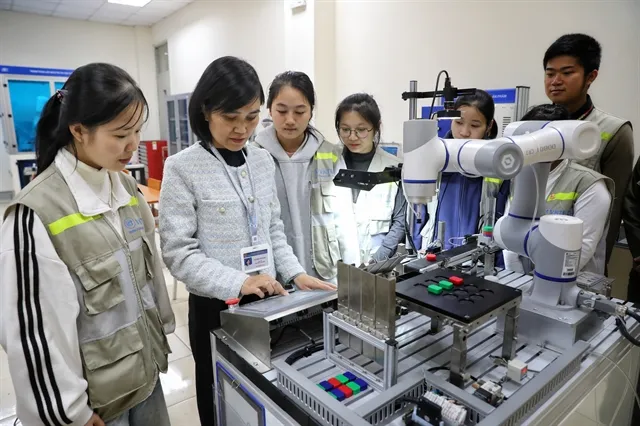
Hanoi is looking to make better use of its young and educated population as the city works to strengthen its economy and respond to changes in the labour market. The rapid development of artificial intelligence, automation and digital technology is changing the skills employers need, making it increasingly important to connect education with practical work opportunities. City officials and experts say young people have the knowledge and ability to contribute to development, but they need stronger links between universities, businesses and local communities to turn their skills into real economic value.
Several examples show how local talent can support traditional industries and new business activities. At Chang Son paper fan-making village, Nguyen Thanh Long returned to his family business after studying economics and gaining experience in the private sector. He introduced mechanised production methods and used social media to reach more customers. The workshop, which once struggled to receive orders, now produces around 1,000 to 1,500 fans each day. New designs have also helped the business respond to changing consumer preferences and explore additional markets.
Technology is creating further opportunities for young people to support local development. An artificial intelligence education initiative in Ha Mo village has introduced residents to practical uses of AI tools in daily life and business. Participants have begun applying their knowledge to online sales and business processes, showing how digital skills can benefit communities beyond major technology companies. Experts say similar initiatives could help smaller businesses improve productivity and compete in a changing economy.
However, Hanoi still faces challenges in matching education with employment demand. National figures show that youth unemployment among people aged 15 to 24 reached 9.07 percent in the third quarter of 2026, while around 1.6 million young people were not in employment, education or training. Hanoi aims to create about 171,000 new jobs during 2026 and improve the training level of its workforce. Officials are therefore encouraging closer cooperation between schools and employers, more internships and practical training, and stronger support for young people entering digital and green industries. The city’s wider goal is to build an economy in which knowledge, innovation and skilled workers contribute directly to long-term development.
