




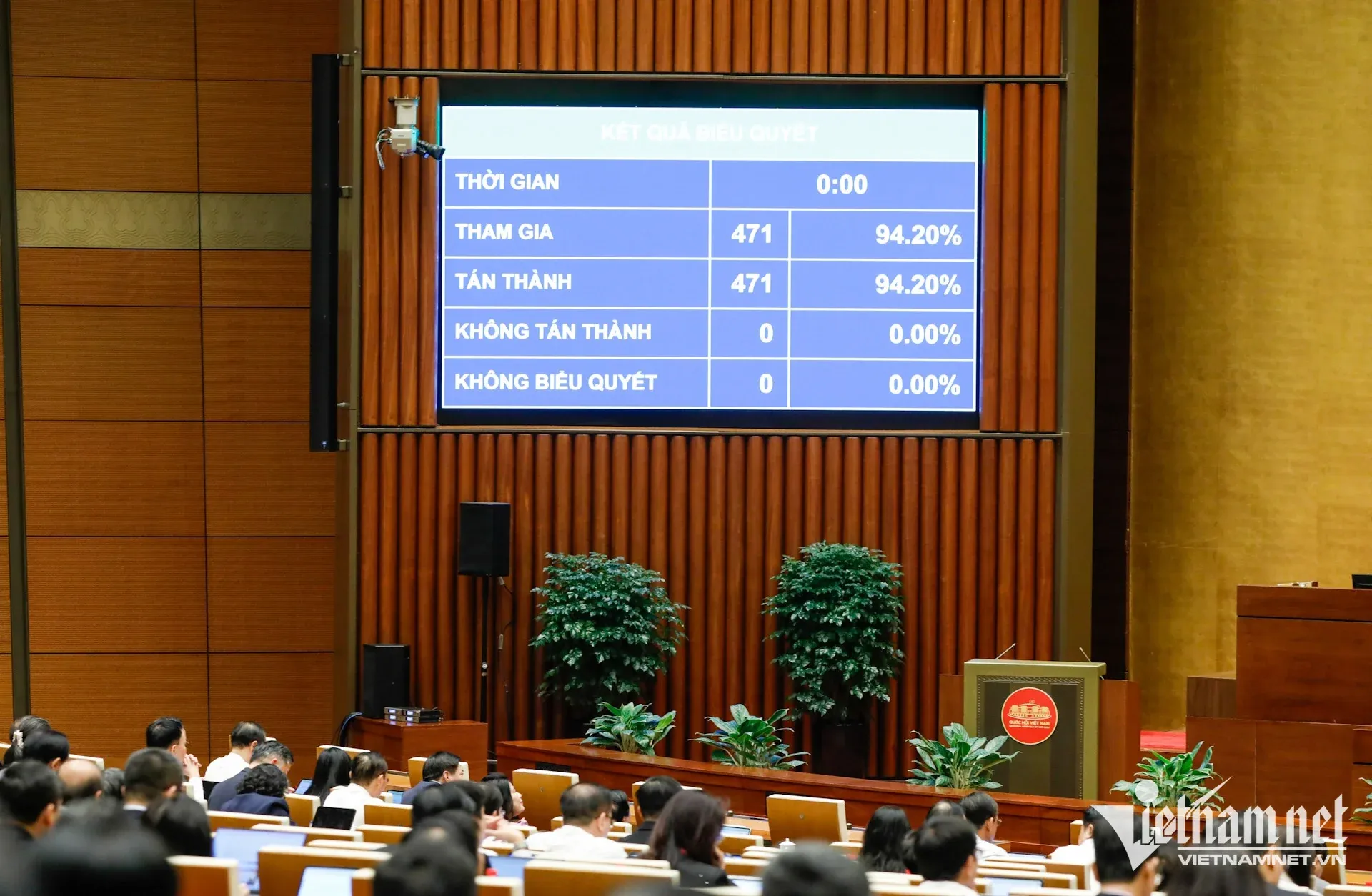
Vietnam’s National Assembly has approved the country’s state budget plan for 2027, setting total government revenue at more than 3.334 quadrillion Vietnamese dong and total expenditure at nearly 4.074 quadrillion dong. The resolution was passed on November 9, with 471 deputies voting in favour, representing 94.2 percent of the National Assembly.
The approved plan sets the expected budget deficit at approximately 739.6 trillion dong, equivalent to 4.5 percent of gross domestic product. The government also estimates that total state borrowing will reach nearly 1.28 quadrillion dong during the year. These figures outline how Vietnam plans to finance public services, infrastructure, social programmes and other national priorities.
Under the resolution, central government revenue is expected to reach nearly 1.776 quadrillion dong, while local government revenue is projected at around 1.559 quadrillion dong. Central spending is set at more than 2.364 quadrillion dong, with local expenditure estimated at approximately 1.709 quadrillion dong.
The budget also includes measures to support salary reforms and social welfare. Funds accumulated for wage reform may be used for salary and allowance adjustments, pensions, social insurance benefits and support for people recognised for their contributions to the country. The government will also be able to use certain reserves to support staff restructuring and other approved social policies.
Revenue collection is expected to increase by around 9.1 percent compared with the estimated result for 2026. To achieve this target, authorities plan to strengthen efforts against tax evasion, transfer pricing and unpaid tax debts. The government will also seek to improve revenue collection from e-commerce, digital platforms and mineral extraction, reflecting the growing importance of online business activity.
The resolution introduces stricter rules for public spending. Government agencies will be required to match expenditure with available resources and their ability to complete projects. New spending policies must have identified funding sources, while public investment will focus on major projects and developments that can generate wider economic benefits.
The plan also calls for a five percent reduction in public investment spending to help fund urgent and important projects. Regular operating expenditure, excluding salaries and personnel-related costs, is set to fall by 10 percent. Funding may be moved away from delayed projects and redirected towards developments that are ready for implementation but require additional resources.
Public investment disbursement remains a major priority. The government reported that 72.1 percent of the 2026 public investment plan had been disbursed during the first 10 months, equal to approximately 720.5 trillion dong. This represented a substantial increase compared with the same period last year.
The 2027 budget is intended to balance economic growth with financial discipline and social support. Its success will depend on how effectively authorities collect revenue, manage public borrowing and complete investment projects. The government will also need to ensure that spending decisions produce measurable benefits for businesses and households.
