




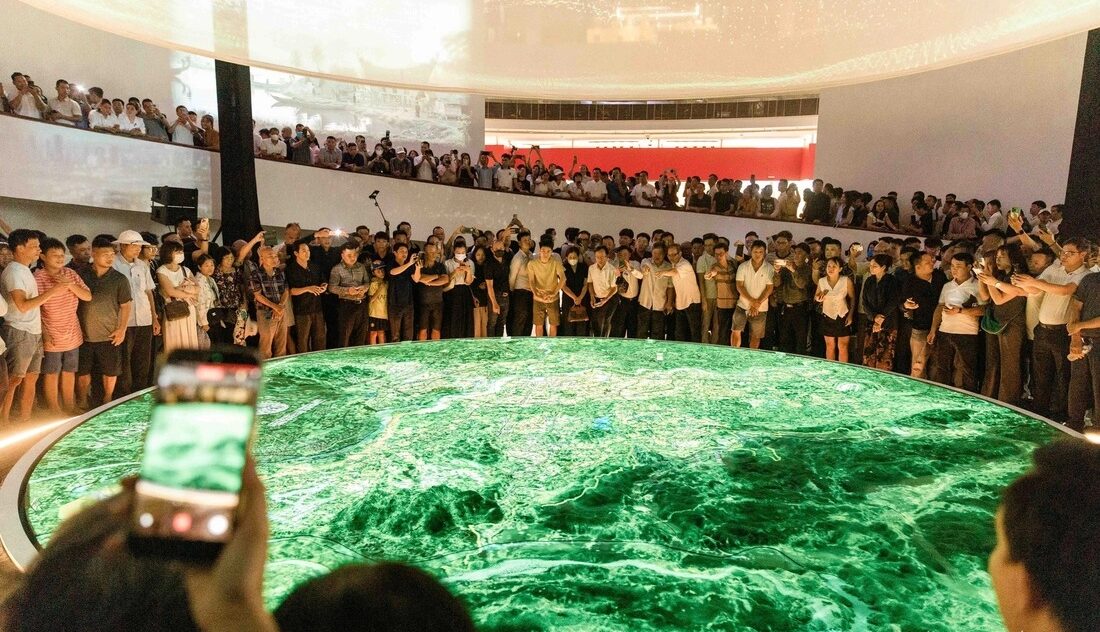
Hanoi is using artificial intelligence, advanced 3D printing and interactive games to create new ways for people to experience the country’s cultural heritage. The project at the Vietnamese Women’s Museum was highlighted in a report published on September 25, 2026, making it one of the latest science and technology developments in the capital. The project combines traditional museum objects with new digital tools to make exhibitions more interactive, especially for younger visitors.
The use of technology is changing how museums present historical objects. Traditional exhibitions often depend on visitors looking at objects and reading information panels. New digital systems can add another layer by allowing visitors to interact with objects and learn through visual and digital experiences. At the Vietnamese Women’s Museum, technology is being used to help people understand heritage in ways that are closer to the digital experiences many young people already use every day.
Artificial intelligence is one of the main technologies involved in the project. AI can help museums create interactive content around historical objects and provide visitors with additional information. Instead of simply looking at an item behind glass, visitors can receive digital explanations and explore related stories. This can make museum visits more active and may encourage younger audiences to spend more time learning about history and culture.
Three-dimensional printing is another important part of the approach. The technology can reproduce physical forms with a high level of detail, allowing museums to create educational models and interactive materials. Such models can be useful when an original object is too fragile to handle or when visitors need a clearer way to understand its shape and design. Digital tools can also allow museums to preserve information about important objects while presenting copies for public interaction.
Interactive games are also being introduced as part of the experience. Games can turn learning into an activity rather than a simple viewing exercise. Young visitors can use challenges and digital tasks to explore historical subjects while developing a better understanding of the objects around them. This approach is increasingly relevant as museums compete for attention in an environment where children and teenagers are familiar with smartphones, computers and digital entertainment.
The project also shows how science and technology can support cultural preservation. Digital systems can help record information about heritage objects and create new ways to present that information. If an object is damaged or becomes difficult to display, digital records and models can still help future visitors understand what it looked like and why it was important.
Museums are also looking at technology as a way to reach people who may not regularly visit cultural institutions. Interactive digital experiences can make exhibitions more attractive to school groups and families. They can also provide teachers with additional tools for explaining history and culture outside the traditional classroom.
For Hanoi, the development fits into the city’s wider effort to expand digital technology. Schools, public institutions and cultural organizations are increasingly using digital systems to improve services and public engagement. The combination of technology and heritage gives Hanoi another area in which digital innovation can be applied to everyday public life.
The project also highlights the growing connection between science, technology and the creative industries. AI and 3D printing are often discussed in relation to manufacturing, business and research, but they can also be used in museums and cultural education. Their use in heritage spaces shows that new technology can serve educational and cultural purposes as well as commercial ones.
There are still practical questions for museums. Digital systems require investment, technical skills and regular maintenance. Museums must also ensure that technology supports historical information rather than replacing the importance of authentic objects. The most useful approach may be one where digital tools add context while the original heritage remains at the center of the experience.
The September 25 report shows how Hanoi is exploring that balance. By combining AI, 3D printing and interactive games with museum collections, the Vietnamese capital is testing new ways to connect younger audiences with history. The project reflects a broader effort to use science and technology not only to build new products, but also to preserve culture and make it easier for future generations to understand.
