




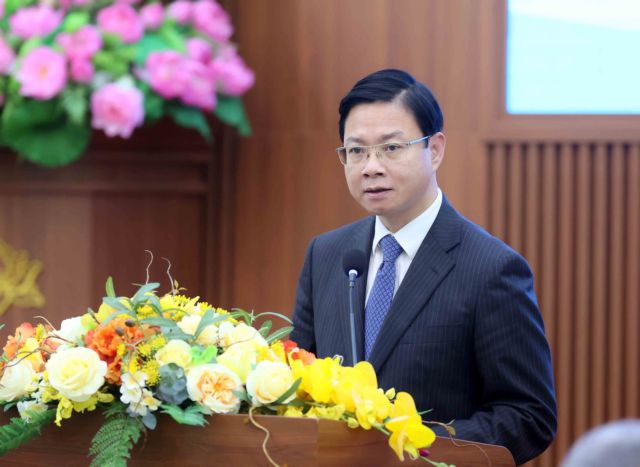
Vietnam is expanding the role of local diplomacy as it seeks new ways to support economic growth, attract quality investment, and strengthen international cooperation. Ahead of the upcoming diplomatic meetings in August, Deputy Foreign Minister Ngô Lê Văn said local diplomacy is no longer limited to traditional diplomatic work. Instead, it is becoming a tool that helps create new development opportunities for provinces and cities across the country.
The shift reflects a broader effort to connect foreign relations with local development goals. According to Văn, local authorities are now taking a more active role in international cooperation. Their work is helping create new partnerships, attract resources, and support long-term growth.
The country has built a strong network of international cooperation at the local level. More than 900 international agreements have been signed, renewed, or kept in force. Localities have also hosted more than 2,500 international conferences and seminars.
Many partnerships have moved beyond friendship exchanges. They now focus on practical cooperation in trade, investment, technology, workforce development, science, digital transformation, green growth, and infrastructure links. This change has helped local governments connect international relations with real economic results.
Border regions have also increased cooperation with neighboring areas. Local authorities continue to work together on border management, transportation links, and trade activities. Efforts are also underway to open and upgrade border gates and improve cross-border connectivity. Some areas have started using smart border gate models to improve efficiency.
A major change can also be seen in investment policies. Many localities are no longer focused on attracting the largest number of projects. Instead, they are selecting projects that offer higher value and stronger long-term benefits.
Priority is now given to sectors such as high technology, semiconductors, artificial intelligence, innovation, green transition, and digital transformation. Local governments are also encouraging projects that support technology transfer, workforce training, and integration into global supply chains.
At the same time, cultural diplomacy continues to grow in importance. Local authorities are working to connect cultural heritage with economic development. Heritage sites and cultural assets are increasingly viewed as resources that can support tourism, investment, and community development.
Officials are also paying greater attention to overseas Vietnamese affairs, international information programs, labor cooperation, and foreign non-governmental support. These activities are being aligned more closely with local development needs.
The Ministry of Foreign Affairs has played a central role in supporting these efforts. According to Văn, the ministry places people, businesses, and localities at the center of its work. It helps local governments identify opportunities, connect with international partners, and solve practical challenges.
The ministry has also worked to improve policies and create a better framework for international cooperation. It has supported local authorities during administrative reforms and helped ensure continuity in international commitments and partnerships.
Since 2024, ministry leaders have conducted about 270 working visits to localities. In addition, 24 meetings with local leaders have taken place in Hanoi.
The ministry has organized nine large conferences that connected local authorities with foreign partners. These events created nearly 2,000 links among local governments, businesses, and international organizations. Around 700 trade, tourism, and investment promotion activities have also been carried out. More than 420 cooperation agreements were supported through these efforts.
Training and capacity building remain another important area of work. Hundreds of training programs have been organized for local officials. Topics include international integration, foreign affairs, foreign languages, translation, and interpretation skills. Authorities also receive regular updates on global trends and international development models.
Looking ahead, officials have identified five key priorities. The first is to move from protecting development opportunities to creating development capacity. This includes focusing on high-tech investment, innovation, artificial intelligence, digital transformation, and strategic minerals.
The second priority is to strengthen cooperation among Party, State, and people-to-people diplomacy while increasing participation in international and multilateral frameworks.
The third priority focuses on stronger coordination between government agencies, businesses, and local authorities. New mechanisms will help improve cooperation and connect local economies with global markets.
The fourth priority is to build stronger and more professional local diplomatic units that can meet future demands.
The fifth priority is digital transformation. New digital platforms, databases, and shared information systems will support better cooperation between central authorities, local governments, and overseas representative offices. The use of artificial intelligence and big data will also help identify opportunities and challenges earlier, supporting better planning and decision-making across the country.
