




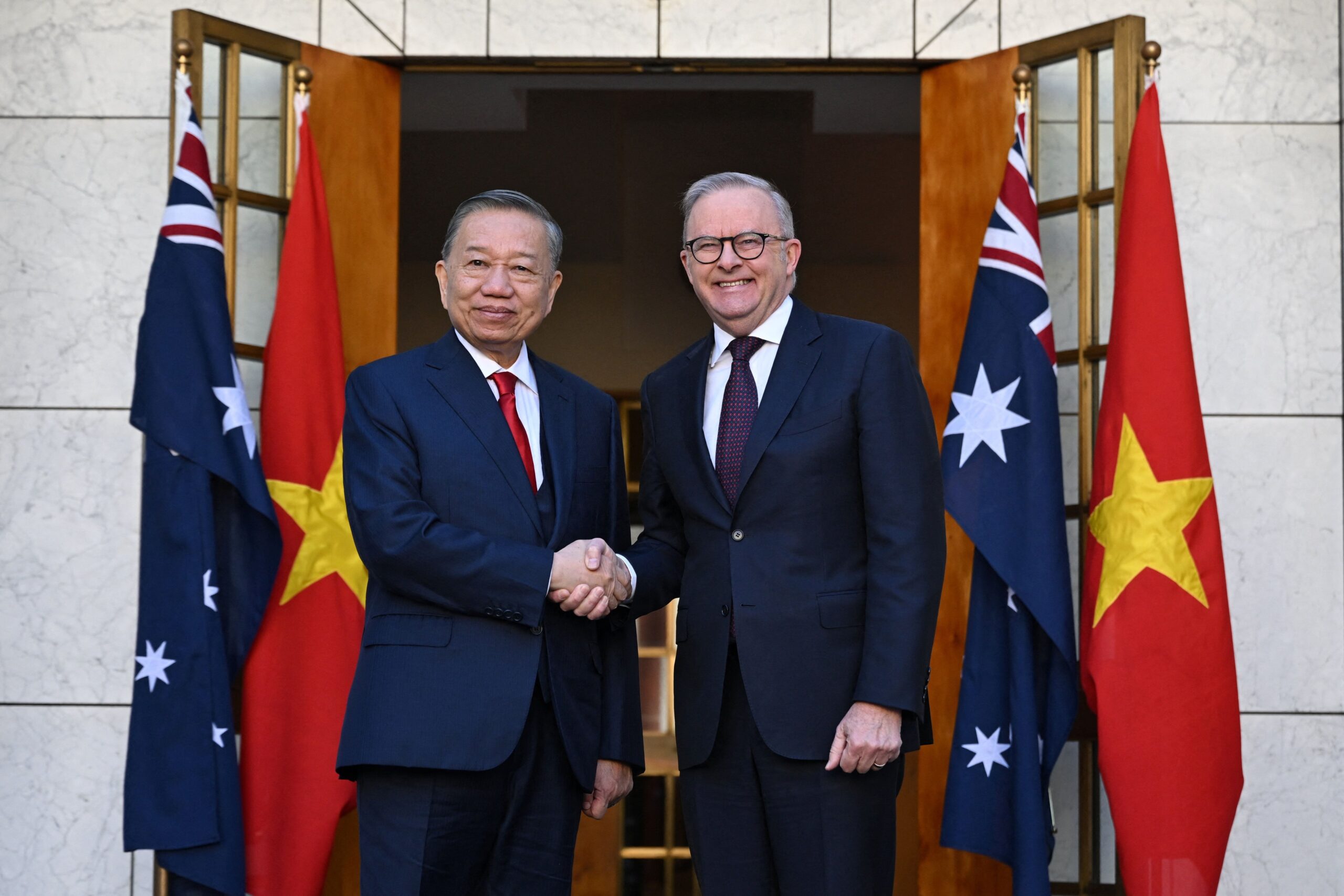
Vietnam and Australia have agreed to deepen their defence partnership following the ninth bilateral defence policy dialogue held in Hanoi on November 9. The meeting brought together senior officials from both countries to review existing cooperation and discuss new areas of work in regional security, military training and defence technology.
The dialogue was co-chaired by Vietnam’s Deputy Minister of National Defence, Senior Lieutenant General Nguyen Truong Thang, and Hugh Jeffrey, Deputy Secretary of Strategy, Policy and International at Australia’s Department of Defence. Both sides described the meeting as an important opportunity to strengthen the Comprehensive Strategic Partnership established in March 2024.
During the discussions, Vietnamese officials highlighted progress in several areas of defence cooperation. These include exchanges between military delegations, high-level consultations, training programmes, United Nations peacekeeping operations and cooperation between the two countries’ armed forces. They also reviewed work involving military medicine, search and rescue and the handling of the remaining effects of past conflicts.
Vietnam expressed appreciation for Australia’s continued support for its peacekeeping operations. Australia has provided air transportation assistance on eight consecutive occasions to help Vietnam deploy its Level-2 Field Hospital to the United Nations Mission in South Sudan. The support has helped Vietnamese medical personnel take part in international peacekeeping activities.
Education and training were also discussed. Vietnam said it hoped to continue receiving Australian scholarships for military personnel at different levels. The Vietnamese defence ministry also expressed its readiness to host Australian military personnel for Vietnamese-language courses and international defence programmes.
Australia proposed expanding cooperation in areas that meet the needs of both countries. Maritime security and search-and-rescue operations were highlighted as important fields for future collaboration. Australian officials also confirmed their willingness to help Vietnam strengthen DNA testing capabilities used to identify the remains of soldiers who died during the war.
This work is connected to Vietnam’s 500-day campaign to accelerate the search for, recovery and identification of fallen soldiers. Australia plans to support the effort by sharing information and documents and helping improve technical capacity. The initiative is an important part of addressing the human consequences of the Vietnam War.
The two delegations also exchanged views on regional and international developments, including maritime security. Vietnam reaffirmed its position that disputes at sea should be resolved peacefully and in accordance with international law, including the United Nations Convention on the Law of the Sea.
Both countries agreed to continue cooperation through regional security platforms, particularly ASEAN-led mechanisms. They also identified possible future work in defence industry, cybersecurity, humanitarian assistance, disaster relief, science and technology.
The dialogue reflects the wider development of relations between Vietnam and Australia. As their partnership expands, defence cooperation is becoming an increasingly important part of their diplomatic relationship and regional engagement.
