




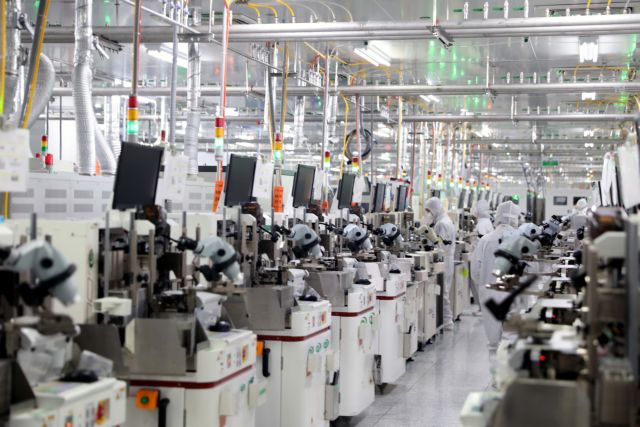
Industrial activity recorded its strongest performance in years during the first seven months of 2026, highlighting the continued strength of the country’s manufacturing and production sectors.
According to the latest report released by the National Statistics Office on August 3, the Industrial Production Growth 2026 rate reached 11.4 percent from January through July. The figure marks the highest seven-month growth level recorded during the 2019–2026 period.
Industrial output continued to expand in July. The Industrial Production Index, commonly known as IIP, increased by 1.2 percent compared with June and rose 14.5 percent compared with the same month last year. The data indicates that industrial activity maintained strong momentum throughout the summer.
The manufacturing and processing sector remained the main driver behind the growth. Industry experts often view this sector as the backbone of industrial development because it creates value through production, exports, and job creation.
From January to July, manufacturing and processing output increased by 12 percent. This was faster than the 10.1 percent growth recorded during the same period in 2025. The sector contributed 9.3 percentage points to overall industrial expansion, making it the largest contributor to national industrial growth.
Mining activity also showed a strong recovery. Output from the mining sector increased by 6.6 percent during the first seven months of the year. This represented a significant improvement compared with the 2.4 percent decline recorded during the same period a year earlier. Mining contributed one percentage point to overall industrial growth.
Electricity production and distribution continued to support economic activity. The sector expanded by 9.9 percent and added 0.9 percentage points to the overall increase in industrial output. Water supply, waste management, and treatment services also posted solid growth of 10 percent.
Several industrial segments recorded especially strong results. Metal production led all major sectors with a growth rate of 23.5 percent. Motor vehicle manufacturing followed with a 16 percent increase, while beverage production expanded by 15.7 percent.
Other industries also showed healthy growth. Production of non-metallic mineral products rose by 13.5 percent. Manufacturing of other transport equipment increased by the same rate, reflecting continued investment and demand across industrial supply chains.
One of the most notable developments was the broad geographic spread of growth. Industrial production increased in all 34 provinces and cities during the January–July period. This indicates that economic activity was not concentrated in only a few industrial centers but expanded across the country.
Hà Tĩnh recorded the strongest industrial growth, with its Industrial Production Index rising by 36.8 percent. Ninh Bình followed with a 27 percent increase. Phú Thọ posted growth of 23.8 percent, while Nghệ An and Thái Nguyên recorded increases of 21.5 percent and 21 percent, respectively.
Although growth was widespread, some provinces experienced slower expansion. Lai Châu recorded the lowest increase at 3.4 percent. Sơn La grew by 3.8 percent, while Lào Cai, Lạng Sơn, and Gia Lai reported growth rates ranging from 5.7 percent to 8 percent.
Officials noted that differences in industrial structures and the performance of major factories helped explain the variation between localities.
Many industrial products recorded impressive gains. Motorcycle production increased by 31.1 percent, making it one of the fastest-growing categories. Laptop production rose by 30.7 percent, reflecting strong demand from technology markets.
Rolled steel output increased by 24.7 percent, while automobile production rose by 24.3 percent. Processed seafood expanded by 21.2 percent, and refined sugar production climbed by 18.5 percent. Beer production grew by 13.9 percent, while crude oil output increased by 12.7 percent.
Not all products experienced growth. NPK fertilizer production declined by 10.9 percent. Monosodium glutamate output fell by 7.8 percent, while leather footwear production decreased by 4.9 percent. Clean coal production also declined by 3.1 percent.
The strong Industrial Production Growth 2026 performance also supported employment. As of July 1, the number of workers employed by industrial enterprises increased by 1 percent from the previous month and rose 3.1 percent compared with the same period last year.
The latest figures suggest that industrial activity remains a key pillar of economic growth, supported by manufacturing expansion, rising production capacity, and improving labor demand across the country.
