




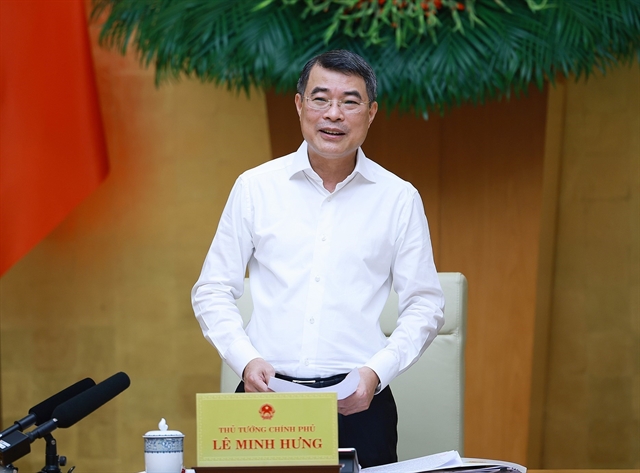
Vietnam is stepping up efforts to achieve strong economic growth as Prime Minister Lê Minh Hưng has called on ministries, sectors and local authorities to quickly turn government directives into practical action plans. The Prime Minister said faster reforms, stronger policy execution and the removal of long-standing obstacles are vital for reaching the country’s goal of double-digit economic growth.
Speaking at the Government’s regular monthly meeting for July, Hưng urged all agencies to accelerate economic activities and ensure that key development targets remain on track. He stressed that public investment must continue to play a central role in supporting growth and boosting economic performance across the country.
The Prime Minister directed ministries and local authorities with low public investment disbursement rates to speed up the allocation and use of funds. Agencies with disbursement levels below 10 percent were instructed to improve implementation and work toward completing the full annual investment plan.
Vietnam’s Government will also continue using monetary policy tools to support economic stability. Authorities will focus on maintaining stable interest rates, ensuring sufficient liquidity in the banking system and protecting both monetary and foreign exchange markets.
Hưng ordered regulators to strengthen oversight of lending activities and prevent unfair competition related to interest rates. He also called for tighter management of credit in high-risk sectors while accelerating efforts to resolve bad debts and continue restructuring the banking sector.
On fiscal policy, the Prime Minister set an ambitious target for State budget revenue. He directed authorities to increase budget collections by at least 10 percent in 2026 compared with the estimated level for 2025. At the same time, tax reductions, fee exemptions and payment extensions will continue to support households and businesses facing financial pressure.
The Government also plans to further develop Vietnam’s capital and stock markets as part of the country’s long-term market upgrade strategy. Officials believe stronger financial markets can help attract investment and support sustainable growth.
Energy security remains another major priority. The Prime Minister instructed ministries to closely monitor global fuel price trends when managing domestic petroleum prices. He also called for urgent action to secure adequate ethanol supplies for biofuel production, including E5 and E10 gasoline blends.
Export growth remains a key focus under the Government’s economic strategy. Hưng urged agencies to maximize the benefits of existing free trade agreements while encouraging exports and controlling imports of non-essential goods. The goal is to maintain a healthy trade balance and support long-term economic stability.
Beyond economic matters, the Government is continuing several national programs. The Prime Minister called for stronger implementation of the 500-Day Campaign aimed at recovering and identifying the remains of fallen soldiers. He also instructed authorities to prepare for the upcoming 2026-27 academic year, including the opening of new boarding schools in border communities.
Healthcare remains another important objective. The Government continues to pursue its goal of providing all citizens with free periodic health check-ups or health screenings by the end of 2026.
The Prime Minister also directed agencies to prepare activities marking the 81st anniversary of the August Revolution and National Day on September 2. He stressed the importance of maintaining national security, public order and readiness for upcoming international engagements involving Party and State leaders.
At a press briefing after the meeting, Government Office Chairman Đặng Xuân Phong said Vietnam’s economy remained stable despite global challenges. Inflation remains under control, with the consumer price index falling 0.1 percent in July compared with the previous month. Average inflation during the first seven months of the year stood at 4.39 percent, remaining within the Government’s target range.
State budget revenue during the first seven months reached approximately VNĐ1.83 quadrillion, representing 72.5 percent of the annual target and a 16 percent increase from the same period last year. Public investment disbursement reached VNĐ425.3 trillion, equal to 41.9 percent of the annual plan.
Foreign investment also showed strong growth. Registered foreign direct investment totaled US$38.06 billion between January and July, up 50.9 percent year-on-year. Realized FDI reached US$15.2 billion, an increase of 11.8 percent. Total import and export turnover rose 28.1 percent to US$659.6 billion.
Despite these positive indicators, officials acknowledged ongoing challenges. Labor shortages continue to affect some projects, while construction and labor costs remain elevated. Rising lending rates and increasing liquidity pressure within the banking sector also present risks as credit demand grows later in the year.
Prime Minister Hưng concluded the meeting by instructing ministries and local authorities to convert government policies into measurable goals with clear timelines and expected outcomes. He said implementation results will be used to assess leadership performance, policy execution and accountability across all levels of government as Vietnam continues its push toward double-digit economic growth.
